2025 Lyrid Meteor Shower Dazzles Stargazers with Stunning Fireballs and Epic Displays!
2025-04-23
Author: Noah
The 2025 Lyrid meteor shower delivered a breathtaking spectacle for stargazers worldwide, with an impressive peak of 10 to 20 meteors streaking through the night sky every hour.
Every year from April 16-25, Earth passes through an ancient trail of debris left behind by comet C/1861 G1 Thatcher. This comet takes a staggering 415 years to orbit the sun, and the Lyrid shower has been enchanting observers since at least 687 BC, making it one of the oldest recorded meteor showers still active today, according to NASA.
Photographers eagerly prepared for this annual cosmic display, especially since the moon remained hidden until the early hours, allowing for unobstructed views of the meteors. Let's dive into some of the most magnificent captures from this year’s show!
Astrophotographer Utku Ucrak seized a dramatic shot of meteors cascading over Ankara's Karagol Geosite on April 22, framed beautifully against shadowy trees.
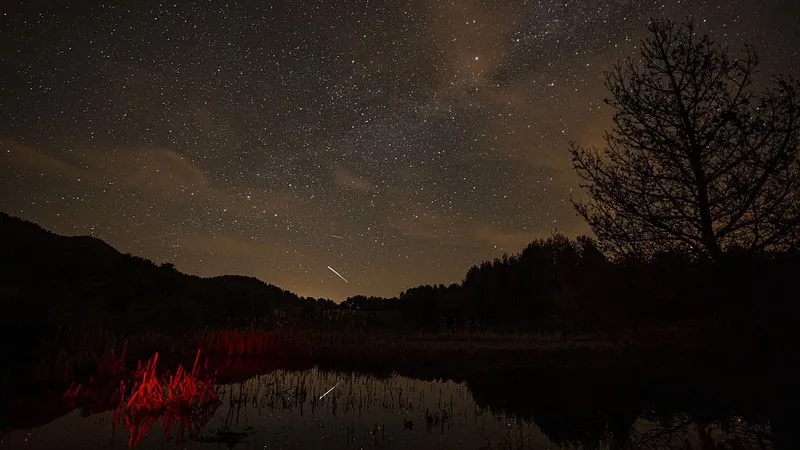
Another stunning capture came from Muhammed Selim Korkutata, who immortalized a Lyrid meteor reflected in tranquil waters from Mount Isik, also in Ankara, on the same night.
Over in Germany, Sebastian Voltmer artistically framed a shooting star amidst the shimmering Milky Way, showcasing the beauty that unfolded during peak Lyrid activity.
On April 21, residents of Brisbane, Australia, witnessed a spectacular fireball blaze across the sky. These bright meteors can outshine planets and are such striking events that experts speculate whether this one was part of the Lyrid display or an unrelated occurrence.
University of Queensland astronomer Jonti Horner clarified the unusually timed fireball was not linked to the Lyrids, noting it appeared too early in the evening.
In Minnesota, user EricTheCat shared an impressive montage of meteors from April 20, capturing the excitement building as the shower approached its peak.
Alternatively, X user Rodamort creatively set up a GoPro for long exposure shots, capturing star trails laced with occasional Lyrid meteors in Northern Idaho.
Feeling the urge to grab your camera? You still have time! The Lyrids will continue dazzling until April 25. Dress warmly, find a remote spot away from city lights, and look toward the constellation Lyra, where the bright star Vega marks the meteor’s origin.
To target the best viewing area, locate Vega and extend your arm. The distance from your thumb to your fist spans approximately 10 degrees; stack four fists above Vega to determine your ideal patch of sky!
Have you captured your own astrophotography? Don’t hesitate to share your stellar images with Space.com at [email protected]! It’s your chance to be part of this heavenly spectacle!



 Brasil (PT)
 Canada (EN)
 Chile (ES)
 Česko (CS)
 대한민국 (KO)
 España (ES)
 France (FR)
 Hong Kong (EN)
 Italia (IT)
 日本 (JA)
 Magyarország (HU)
 Norge (NO)
 Polska (PL)
 Schweiz (DE)
 Singapore (EN)
 Sverige (SV)
 Suomi (FI)
 Türkiye (TR)
 الإمارات العربية المتحدة (AR)