Breaking Discovery: Two New Crocodile Species Unearthed in Mexico!
2025-04-24
Author: Jacob
Revolutionary Find on the Yucatán Peninsula
In an exhilarating breakthrough, researchers from McGill University, in partnership with esteemed Mexican scientists, have unveiled two new species of crocodiles lurking in the waters off the Yucatán Peninsula! One of these newfound reptiles calls the serene island of Cozumel home, while the other resides within the protected atoll of Banco Chinchorro. This discovery is reshaping our understanding of the American crocodile (Crocodylus acutus) and sounding the alarm for urgent conservation measures.
A Call to Action: Protecting Endangered Biodiversity
"Biodiversity is vanishing quicker than we can grasp it," warns Professor Hans Larsson, the study's lead investigator. With many crocodile species hovering on the brink of extinction, rampant coastal development threatens nearly every population. The goal of this research? To peel back the layers and reveal the true diversity of these remarkable crocodilians inhabiting such isolated locales.
Genetic Revelations Challenge Old Beliefs
Larsson’s dedicated team dove deep into the genetic makeup of crocodiles from Cozumel and Banco Chinchorro. By contrasting their DNA with that of crocodiles from the Caribbean, Central America, and Mexico’s Pacific coast, they stumbled upon unexpected levels of genetic diversity. The findings suggest these populations are not merely variations of Crocodylus acutus but represent entirely new species!
A Surprising Twist!
José Avila-Cervantes, a former graduate student and lead author of the study, expressed astonishment: "We thought Crocodylus acutus was a single species stretching from Baja California to Venezuela. This study is the first to thoroughly examine the genomic and anatomical differences in these incredible animals!"
Vulnerable Yet Stable
These recently identified species exist in small, isolated groups—each with fewer than 1,000 breeding crocodiles. Despite their apparent stability, their limited populations and restricted habitats place them at higher risks. "To halt the rapid decline in biodiversity, we must pinpoint the species most in jeopardy," stresses Larsson. Recognizing these crocodiles as distinct species underscores the urgency to safeguard their environments.
The Path Forward: Conservation is Key
To protect these newly classified reptiles, Larsson emphasizes the need for imposing limits on land development and initiating targeted conservation strategies on Cozumel and Banco Chinchorro. Their survival hinges on concerted efforts to preserve these unique ecosystems.
Collaborative Research Efforts
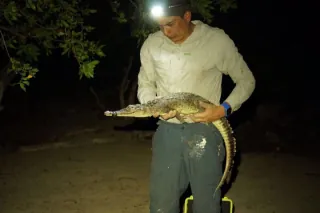
This significant research endeavor received valuable support from local researchers, including Pierre Charruau from El Colegio de la Frontera Sur in Mexico. The team meticulously captured and released crocodiles, collecting vital blood and scale samples for genetic analysis, which was conducted at McGill by Avila-Cervantes. The study also delved into skull morphology, further illuminating the distinctions among this fascinating group of reptiles.
Academic Acknowledgment
The groundbreaking findings were published in the journal Molecular Phylogenetics and Evolution under the title 'Novel island species elucidate a species complex of Neotropical crocodiles.' Funding for this vital research was provided by several prestigious organizations, ensuring a future for these newly recognized crocodile species.



 Brasil (PT)
 Canada (EN)
 Chile (ES)
 Česko (CS)
 대한민국 (KO)
 España (ES)
 France (FR)
 Hong Kong (EN)
 Italia (IT)
 日本 (JA)
 Magyarország (HU)
 Norge (NO)
 Polska (PL)
 Schweiz (DE)
 Singapore (EN)
 Sverige (SV)
 Suomi (FI)
 Türkiye (TR)
 الإمارات العربية المتحدة (AR)