Canadian Companies Defy Tariffs: Why They’re Choosing to Expand at Home Rather Than Head South
2025-04-20
Author: Sophie
In a surprising twist, many Canadian businesses are refusing to buckle under pressure from U.S. tariffs, opting instead to bolster their operations on home soil. Odd Burger Corp., based in London, Ontario, offers a case in point. CEO James McInnes halted their U.S. expansion plans, intended to capitalize on a burgeoning vegan market, to invest $2 million in a new manufacturing facility in Canada.
Tariffs Backfire: A Movement Toward Domestic Growth
This isn't an isolated scenario. As President Trump’s tariffs loom large, a growing number of Canadian firms—large and small—are choosing to focus on domestic markets rather than succumb to U.S. opportunities. In a bird's-eye view, Trump's tariffs appear to have ignited a patriotic wave, pushing Canadian consumers and businesses to support local products.
Shifts in Manufacturing: Opportunity Amidst Pressure
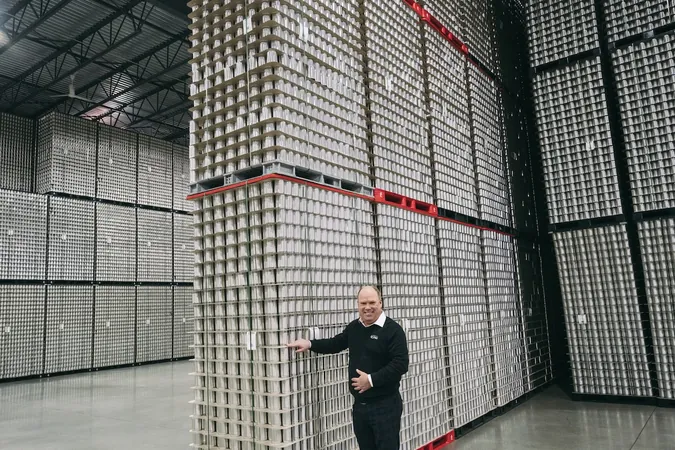
For example, Erick Vachon, president of Ideal Can Inc. in Quebec, has more than tripled his shifts since the onset of the trade war. With skyrocketing demand for locally-produced cans, Vachon has exponentially increased production—from 200 million to 500 million cans per year. Interestingly, tariffs have allowed him to bypass American distributors, directly dealing with international steel mills for better pricing.
Similarly, Anil Abrol, CEO of Eco Guardian Inc., is ready to launch a compostable packaging facility in Ontario by the end of 2025, aiming to replace imports from the U.S. with sustainable Canadian options. His proactive approach showcases an unexpected urgency brought by tariffs, inspiring immediate adaptations instead of gradual ones.
Aerospace and Electronics: Adapting to New Realities
In the aerospace sector, Brad Bourne of Firan Technology Group Corp. sees the U.S. market as becoming more isolated. Although he won’t abandon U.S. operations, his focus is on ensuring that Canadian facilities can operate independently, which will include relocating significant projects back to Canada.
Corporate Giants Join the Movement
Even larger firms like Montreal's Transcontinental Inc. are eyeing domestic opportunities, reflecting a shifting landscape in Canadian manufacturing. Their CEO hinted at possible acquisitions within Canada, spurred by the tariffs.
Challenges on the Horizon: Experts Weigh In
While many companies are finding hope amid uncertainty, experts caution that tariffs will likely deter long-term investment. Economists express skepticism that the benefits of relocating to Canada will outweigh the increased costs and market size limitations. Tariff-induced price surges are creating a complex environment for businesses.
Creating New Opportunities Through Local Investment
Some industry leaders see a chance to reclaim market share lost to foreign imports, shifting focus back to local consumers. Trade remedies may be invoked to protect Canadian businesses from unfair competition. Economic studies suggest that a small shift in consumer purchasing could significantly boost Canada's GDP and create thousands of jobs.
A Changing Landscape: Political Action and Future Prospects
Canadian politicians are increasingly emphasizing the importance of supporting local industries. Prime Minister Mark Carney has proposed a manufacturing network aimed at reducing reliance on U.S. imports, while Alberta's leadership is advocating for diversifying crude oil export markets.
In conclusion, while challenges persist, a new wave of proactive thinking is transforming the Canadian business landscape. Companies like Odd Burger may defer their U.S. ambitions for now, but their commitment to fostering growth at home underscores a powerful shift towards self-sufficiency and resilience.

 Brasil (PT)
 Canada (EN)
 Chile (ES)
 Česko (CS)
 대한민국 (KO)
 España (ES)
 France (FR)
 Hong Kong (EN)
 Italia (IT)
 日本 (JA)
 Magyarország (HU)
 Norge (NO)
 Polska (PL)
 Schweiz (DE)
 Singapore (EN)
 Sverige (SV)
 Suomi (FI)
 Türkiye (TR)
 الإمارات العربية المتحدة (AR)