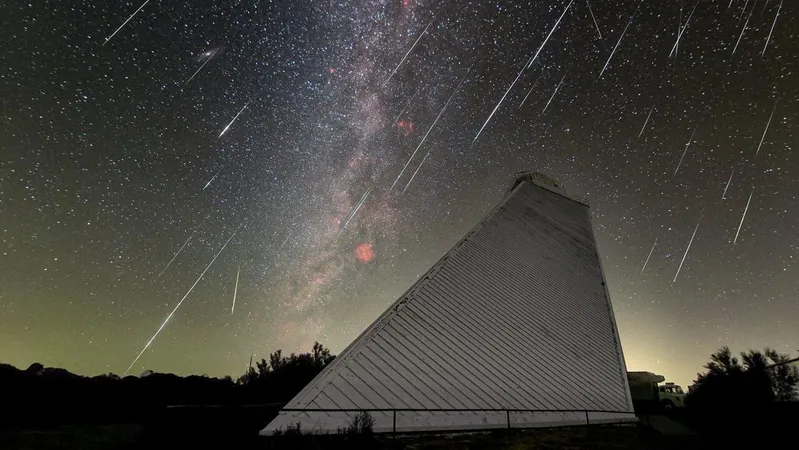
Catch the Spectacular Lyrid Fireballs This Monday: Here's When to Look Up!
2025-04-20
Author: Noah
Get Ready for a Celestial Show!
The renowned Lyrid meteor shower, known for its breathtaking displays of shooting stars, is set to reach its peak on the night of Monday to Tuesday, April 21-22. Skywatchers can expect to see about 18 meteors per hour, and this year's show promises some astonishingly bright fireballs!
What Makes the Lyrid Meteor Shower So Unique?
Unlike many meteor showers that are associated with debris from well-known comets, the Lyrids are linked to the mysterious C/1861 G1, also known as Comet Thatcher. "This comet is quite obscure, and we don't know much about it," explains astronomer Moskovitz. "It last graced our solar neighborhood in 1861 and won't return until 2283!" Talk about a rare cosmic event!
Why You Might See Extraordinary Fireballs!
As these meteors enter our atmosphere, they burn up, creating a dazzling light show. Some of them, known as fireballs, can be extraordinarily bright and leave long trails behind. "The Lyrids are special because of the variety and size of particles they emit, ranging from tiny dust to grapefruit-sized chunks," Moskovitz reveals. Get ready for a visual feast!
What's Next After the Lyrids?
If you miss the Lyrids, don't fret! The next meteor shower, the Eta Aquarids, is looming on the horizon. Running from April 19 to May 28, this shower will peak in the early hours of May 5, featuring around 40 to 60 meteors per hour. The Eta Aquariids are a gift from none other than Halley’s Comet.



 Brasil (PT)
 Canada (EN)
 Chile (ES)
 Česko (CS)
 대한민국 (KO)
 España (ES)
 France (FR)
 Hong Kong (EN)
 Italia (IT)
 日本 (JA)
 Magyarország (HU)
 Norge (NO)
 Polska (PL)
 Schweiz (DE)
 Singapore (EN)
 Sverige (SV)
 Suomi (FI)
 Türkiye (TR)
 الإمارات العربية المتحدة (AR)