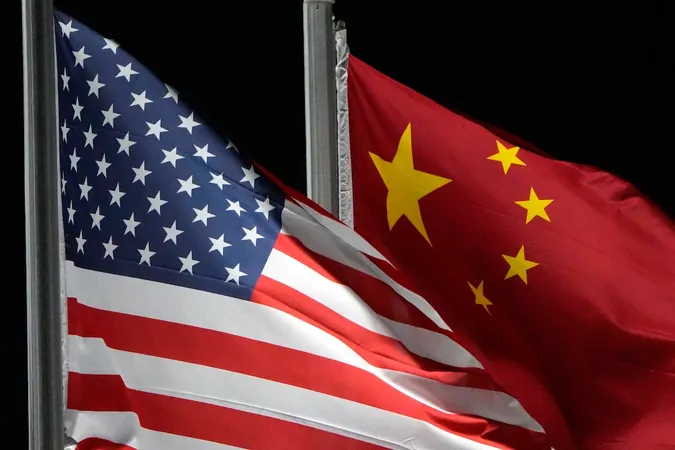
China Makes Surprise Move: Eases U.S. Tariffs Amid Trade Tensions
2025-04-25
Author: Sophie
In a surprising twist in the ongoing trade saga, China has exempted certain U.S. imports from its hefty tariffs, hinting that the trade war between the world's two largest economies might just be calming down. However, Beijing has swiftly dismissed President Donald Trump’s claims of ongoing negotiations.
According to business groups, China has allowed some American-made pharmaceuticals to enter the country without bearing the 125% duties imposed earlier in response to Trump’s aggressive 145% tariffs on U.S. goods. Additionally, there are whispers about a list of 131 products potentially up for exemptions, ranging from vaccines to jet engines, though this has yet to be publicly confirmed by China.
Trump, in recent remarks, expressed optimism about a trade dialogue, asserting that talks were indeed happening and even noted that Chinese President Xi Jinping had reached out to him. "I don’t think it’s a sign of weakness on his behalf," Trump stated.
Yet, China was quick to shut down these assertions, declaring on social media, "China and the U.S. are NOT having any consultation or negotiation on #tariffs. The U.S. should stop creating confusion." This denial comes amidst Trump’s announcement of targeted tariffs on a myriad of other countries, which have been postponed until July 9.
As nations scramble to secure favorable trade deals before the upcoming deadline, Trump mentioned he was on the verge of finalizing a deal with Japan, which analysts view as a crucial precursor for future negotiations. Anticipation is building for a potential announcement at the G7 summit in Canada in June.
In a separate interview, Trump claimed he had labored over "200 deals" ready for completion within the next month but left many specifics shrouded in mystery. If tariffs remain between 20% and 50% by this time next year, Trump would consider it a "total victory" for his administration.
While Trump heralds these tariffs as a means to rejuvenate American manufacturing, economists are raising alarms, cautioning that these measures could lead to surging prices for consumers and elevate the risk of a recession.
Since Trump took office, U.S. stocks have plummeted about 10%, trailing behind market indexes from other nations, with the dollar experiencing unprecedented decline. On Friday, as hopes stirred for a deescalation in U.S.-China tensions, Wall Street saw a subtle uptick in stocks, although investors remained on edge about trade developments.
In addition to country-specific tariffs, Trump’s sweeping trade measures include a blanket 10% tariff on all U.S. imports and steeper duties on steel, aluminum, and auto imports. There are considerations for additional industry-specific tariffs that could inflate drug prices in the U.S. by 12.9%, according to industry estimates.
The implications of Trump's tariffs were a hot topic during the International Monetary Fund and World Bank spring meetings, with finance ministers vying for one-on-one discussions with U.S. Treasury Secretary Scott Bessent. Bessent described initial talks with South Korea as "very successful," marking a positive step forward.
Despite these developments, signs of concrete progress with other countries remain scarce, even as the head of the IMF, Kristalina Georgieva, cautioned that sluggish global growth could be a threat if negotiations falter.


 Brasil (PT)
 Canada (EN)
 Chile (ES)
 Česko (CS)
 대한민국 (KO)
 España (ES)
 France (FR)
 Hong Kong (EN)
 Italia (IT)
 日本 (JA)
 Magyarország (HU)
 Norge (NO)
 Polska (PL)
 Schweiz (DE)
 Singapore (EN)
 Sverige (SV)
 Suomi (FI)
 Türkiye (TR)
 الإمارات العربية المتحدة (AR)