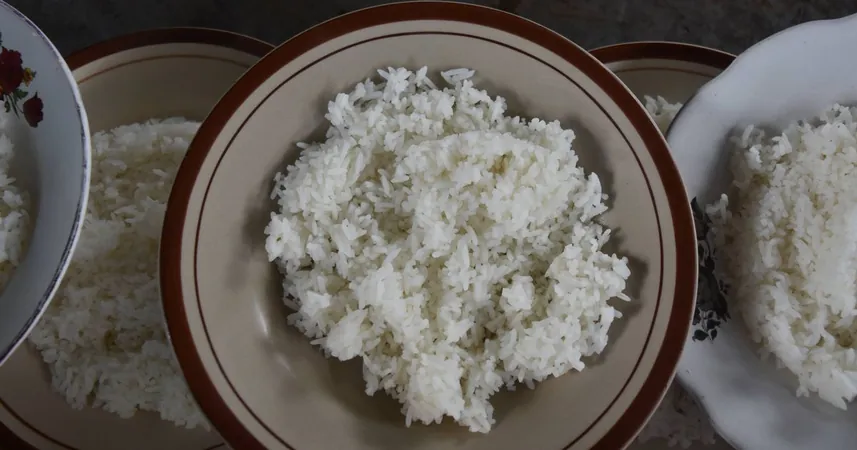
Climate Change Could Make Rice Toxic: Shocking Study Reveals
2025-04-20
Author: Olivia
Rice Under Siege: The Alarming Impact of Climate Change
A groundbreaking study has dropped a bombshell: climate change is set to transform rice, the world's most consumed grain, into a toxic food source. Published in The Lancet, this research uncovers a disturbing link between rising temperatures, soaring carbon dioxide levels, and the absorption of arsenic—a dangerous heavy metal.
A Global Crisis for Rice Dependents
For billions, especially in developing nations, rice is a dietary cornerstone. This news is terrifying for those who rely on it daily. A meticulous six-year investigation led by teams from the US and China scrutinized how various rice species react to escalating greenhouse gas emissions, revealing implications that may ripple across the globe.
Shocking Findings from a Veteran Researcher
Lewis Ziska, a seasoned plant physiologist at Columbia University, has dedicated thirty years to studying climate change's effect on staple crops. He expressed astonishment over the study's findings. "Previous studies looked at either CO2 or temperature individually, but not together across a range of rice genetics. The combination's impact was completely unexpected," he said.
The Toxic Reality: Arsenic Levels Spike
The research indicates that elevated carbon dioxide and temperature significantly increase both arsenic and inorganic arsenic content in rice. Inorganic arsenic is tied to various cancers—skin, bladder, lung—as well as heart disease and neurological problems in infants.
A Growing Health Crisis
Regions where rice is a dietary staple face a heightened cancer risk. While scientists have been aware of arsenic concerns in rice for some time, this study amplifies those fears, emphasizing the toxicological threats posed by climate change.
Seeking Solutions: New Rice Strains on the Horizon
Ziska stressed the magnitude of this crisis: "It's alarming how the consumption of a single crop can dictate vulnerability to toxicity on a massive scale." In response, researchers are now exploring rice strains that could absorb less arsenic, while also encouraging consumers to seek alternative food sources.



 Brasil (PT)
 Canada (EN)
 Chile (ES)
 Česko (CS)
 대한민국 (KO)
 España (ES)
 France (FR)
 Hong Kong (EN)
 Italia (IT)
 日本 (JA)
 Magyarország (HU)
 Norge (NO)
 Polska (PL)
 Schweiz (DE)
 Singapore (EN)
 Sverige (SV)
 Suomi (FI)
 Türkiye (TR)
 الإمارات العربية المتحدة (AR)