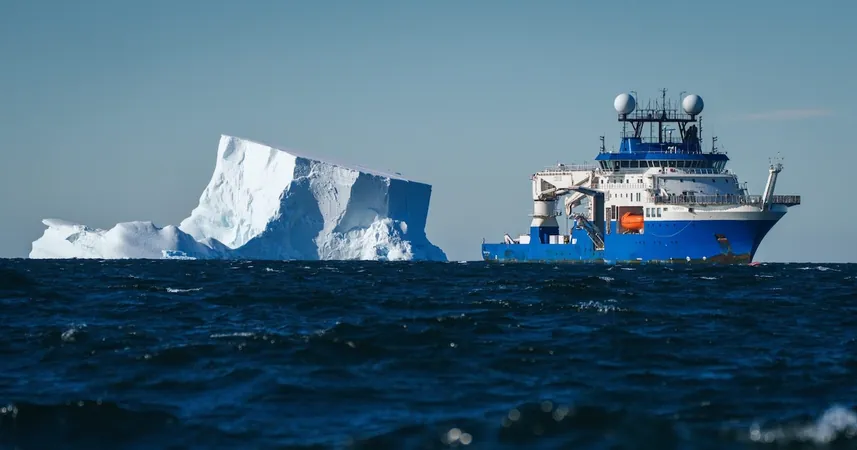
Iceberg Breaks Loose in Antarctica, Revealing Hidden Ecosystems Beneath 500 Feet of Ice!
2025-04-23
Author: Amelia
A Shocking Development in Antarctica
When large icebergs break away from Antarctica, it sends waves of concern throughout the world. This alarming event not only serves as a stark reminder of the ongoing climate crisis but poses serious risks to rising sea levels, marine vessels, and low-lying islands.
A Rare Opportunity Unfolds
Recently, a massive iceberg calved from the George VI Ice Shelf, allowing researchers nearby a rare opportunity to explore untouched ecosystems that lie just beneath the thick ice sheets of Antarctica. The stunning images captured by the research team are nothing short of mesmerizing.
Researchers in Action!
According to the Schmidt Ocean Institute, which specializes in ocean research, the iceberg's breakaway prompted a quick change in their research strategy. Executive Director Dr. Jyotika Virmani stated, "The science team was already in this remote area to study the ice-sea interface. Witnessing the iceberg's calving was a serendipitous moment that offered us a chance to uncover the hidden wonders of our world."
Incredible Discoveries Below the Ice
Using the Schmidt Ocean Institute’s remotely operated vehicle, ROV SuBastian, the team made astonishing discoveries: delicate sea sponges, vibrant anemones, icy icefish, curious seaspiders, and even a striking octopus. This exploration revealed a seafloor area exceeding 500 square kilometers, previously obscured for centuries.
New Insights into an Alien World
This groundbreaking research provided some of the initial insights into the unique ecosystems thriving beneath Antarctica's ice. As Dr. Patricia Esquete from the University of Aveiro noted, "We took full advantage of the situation, altering our plans to investigate the depths below. We were stunned to find such a thriving, beautiful ecosystem, suggesting these communities have existed for decades, if not centuries."
Survival Against All Odds
What’s truly remarkable is that these marine creatures have managed to survive under 500 feet of ice for generations without any surface nutrients filtering down. Nutrients from ocean currents are their only lifeline, leaving researchers intrigued by how this rich biodiversity persists in such isolation.
A Looming Question: What’s Next?
Yet, as the ice sheets continue to recede under the weight of climate change, the pressing question remains: Will these remarkable creatures endure, or will the impacts of the climate crisis lead to the demise of their habitats and the slow extinction of these extraordinary ecosystems?



 Brasil (PT)
 Canada (EN)
 Chile (ES)
 Česko (CS)
 대한민국 (KO)
 España (ES)
 France (FR)
 Hong Kong (EN)
 Italia (IT)
 日本 (JA)
 Magyarország (HU)
 Norge (NO)
 Polska (PL)
 Schweiz (DE)
 Singapore (EN)
 Sverige (SV)
 Suomi (FI)
 Türkiye (TR)
 الإمارات العربية المتحدة (AR)