Revolutionary Enzyme Research Could Transform Treatments for Leukemia and Tuberculosis!
2025-04-24
Author: Liam
Groundbreaking Discoveries at the University of Guelph
Researchers at the University of Guelph have made startling revelations that could pave the way for groundbreaking new treatments for two of the world's most lethal diseases: leukemia and tuberculosis (TB). This research uncovers the crucial role of specialized enzymes in combating these illnesses, focusing on their ability to destroy damaged proteins—a vital process for cell survival.
Proteases: The Molecular Key!
Published in the esteemed journals *Nature Communications* and *Proceedings of the National Academy of Sciences*, the studies explored two types of proteases, known as molecular scissors, which are essential for maintaining cellular health. These enzymes play a significant role in acute myeloid leukemia (AML), a particularly aggressive form of cancer, and TB, which is responsible for more deaths than any other infectious agent globally.
Unlocking New Treatment Strategies!
Finding ways to deactivate these enzymes could open exciting new therapeutic avenues. However, their inherent complexity and tendency to shift between active and inactive forms have long hindered research efforts. Now, thanks to advanced biochemical techniques, researchers have managed to capture these enzymes in their dynamic states, creating a solid foundation for the next era of drug development.
Dr. Siavash Vahidi, the principal investigator, states, "If we can stabilize these enzymes in either their active or inactive states using small molecule drugs, we could develop potent new therapeutics." This breakthrough is particularly urgent given that over a million people die from TB each year, and current treatments often have severe side effects and high rates of non-compliance.
A Race Against Time: The Challenges of AML and TB
Both AML and TB present dire challenges: AML is known for its swift progression, with 90% of older patients not surviving beyond two years, while TB's drug-resistant strains complicate treatment even further. The insights gained from this research could lead to more effective therapies that are less likely to provoke resistance, a critical consideration in managing TB.
The Rising Stars Behind the Research
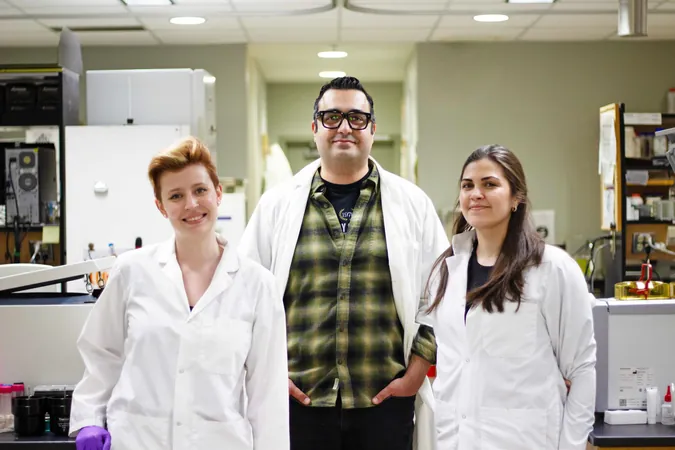
PhD students Madison Turner and Monica Goncalves, described by Vahidi as the "core pillars of the lab", have played pivotal roles in this project. Turner focused on the proteasome, the enzyme linked to TB, while Goncalves tackled the ClpP protease tied to cancer cells. Their findings highlight the complexity of enzyme behavior, with Goncalves uncovering an unexpected activation of cancer-related enzymes at low chemical doses.
A Lab Born in Challenging Times
Vahidi established his lab amid the COVID-19 pandemic in June 2020, a challenging time for new research. Despite these hurdles, the team has made impressive strides, tackling complex protein systems and garnering publications in prestigious journals.
Reflecting on their journey, Vahidi shared, "If someone had told me we’d achieve this level of success in five years, I would have thought they were dreaming!" Each breakthrough is a testament to the dedication of the team, alongside valuable collaborations and funding from the Canadian Institutes of Health Research.
The Future is Bright!
Looking ahead, Vahidi's lab is also utilizing AI technology to engineer custom proteins designed to influence targeted enzymes significantly. With a vision to translate their findings into real-world applications, Vahidi notes, "We are not far from pushing the boundaries of science to directly benefit patients and potentially prevent future pandemics." This research represents a beacon of hope for countless patients afflicted by these formidable diseases.



 Brasil (PT)
 Canada (EN)
 Chile (ES)
 Česko (CS)
 대한민국 (KO)
 España (ES)
 France (FR)
 Hong Kong (EN)
 Italia (IT)
 日本 (JA)
 Magyarország (HU)
 Norge (NO)
 Polska (PL)
 Schweiz (DE)
 Singapore (EN)
 Sverige (SV)
 Suomi (FI)
 Türkiye (TR)
 الإمارات العربية المتحدة (AR)