Shocking Decision: ICE Blocks Father from Witnessing Son's Birth Amid Controversy
2025-04-22
Author: Sophie
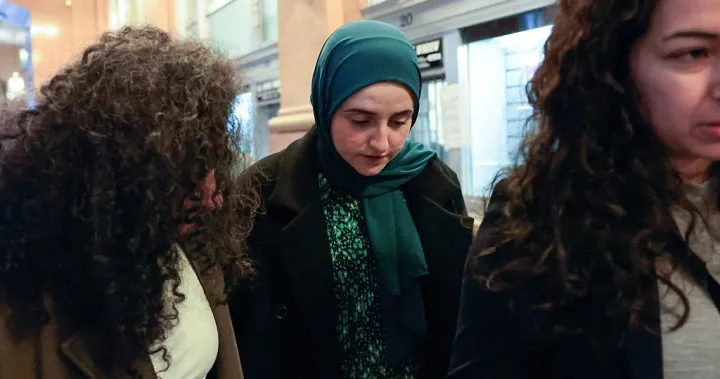
In a heart-wrenching turn of events, Noor Abdalla welcomed her first child alone in New York, as U.S. Immigration and Customs Enforcement (ICE) denied her husband, Mahmoud Khalil, the right to witness this monumental moment. Khalil, a Palestinian activist and Columbia University graduate, is currently detained in Louisiana for his role in pro-Palestinian protests.
The couple's son arrived on Monday, but Khalil's request for a two-week furlough—submitted just after his wife went into labor eight days early—was swiftly rejected. His legal team had offered to comply with various conditions, including wearing an ankle monitor, to secure his temporary release.
Melissa B. Harper, ICE's New Orleans field office director, delivered the grim news, stating, "After consideration of the submitted information and a review of your client’s case, your request for furlough is denied." In response, Abdalla expressed her anguish, saying it felt like ICE was deliberately inflicting suffering on their family.
"My son and I should not be navigating his first days on earth without Mahmoud," she lamented. Abdalla accused ICE and the Trump administration of robbing them of these precious moments, framing Khalil's detention as a tactic to silence his advocacy for Palestinian rights.
Khalil, a prominent figure during last spring’s protests at Columbia, avoided encampments to protect his legal standing in the U.S. Despite not actively participating, he became a key spokesperson, navigating negotiations and engaging with media.
His arrest on March 8 was part of a broader crackdown on student activism deemed a response to concerns over rising antisemitism. Khalil’s detention has raised alarms regarding freedom of speech, especially as he has been vocal against the treatment of Palestinians.
Khalil’s detainment was seen as a direct hit from the Trump administration aimed at stifling dissent on college campuses. His comments during the protests, denouncing antisemitism while addressing anti-Palestinian sentiments, highlighted the complexity of the issues at hand.
Despite having no criminal charges against him, Khalil is in jeopardy of deportation, as officials argue his presence could cause "potentially serious foreign policy consequences." His legal team is preparing an appeal to challenge the ruling.
As this situation unfolds, the implications extend far beyond one family's tragedy, sparking critical conversations about immigration policies, freedom of speech, and the rights of activists in America.


 Brasil (PT)
 Canada (EN)
 Chile (ES)
 Česko (CS)
 대한민국 (KO)
 España (ES)
 France (FR)
 Hong Kong (EN)
 Italia (IT)
 日本 (JA)
 Magyarország (HU)
 Norge (NO)
 Polska (PL)
 Schweiz (DE)
 Singapore (EN)
 Sverige (SV)
 Suomi (FI)
 Türkiye (TR)
 الإمارات العربية المتحدة (AR)