Shocking Discovery: Microplastics Found in Caddisfly Casings Expose Decades of Pollution
2025-04-21
Author: Charlotte
A Groundbreaking Discovery in Biodiversity
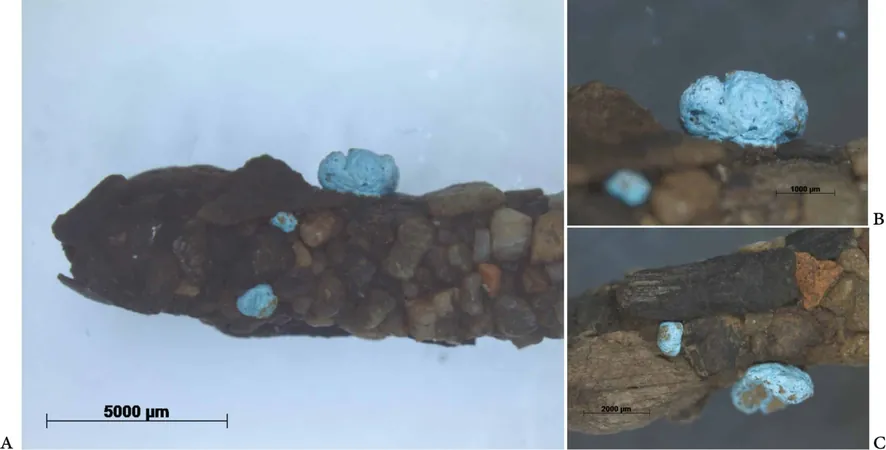
In a startling revelation, researchers at the Naturalis Biodiversity Centre in the Netherlands have discovered microplastics embedded in caddisfly casings, demonstrating that pollution from these tiny particles has been an environmental issue for over fifty years. This finding defies previous beliefs about the timeline of microplastic contamination, revealing that it dates back at least to the 1970s.
What Are Caddisflies?
Caddisflies are fascinating, moth-like insects that thrive in freshwater environments like lakes and streams around the world. They are ecological powerhouses, laying eggs in gelatinous masses that hatch into larvae capable of weaving intricate protective casings. These casings, crafted from natural materials, shield them from predators and exemplify how caddisflies adapt to their surroundings.
The Startling Investigation
The researchers' groundbreaking investigation began with a curious observation of a colorful element on a caddisfly casing. Upon further analysis, they confirmed it was microplastic. Intrigued, the team meticulously examined a collection of 549 casings gathered over decades. Their findings were profound: many casings from various years, including a remarkable specimen from 1986 loaded with blue microplastics, revealed the insidious presence of pollution in these aquatic insects.
Wider Environmental Concerns
The implications of these findings are alarming. The research highlights not just the persistent contamination of our waterways but raises significant fears for wildlife health. The presence of microplastics may increase caddisfly visibility to predators like fish and birds, potentially disrupting the food chain. Moreover, as caddisflies increasingly substitute natural materials for microplastics in their casings, the risk to their survival and overall aquatic ecosystem balance grows.
The Urgency of Addressing Pollution
This vital research underscores the urgent need to tackle microplastic pollution, which poses a threat not only to caddisflies but to numerous species that rely on healthy freshwater habitats. As awareness spreads, it becomes crucial for society to confront this environmental challenge head-on and work towards solutions that preserve both our ecosystems and the biodiversity they support.



 Brasil (PT)
 Canada (EN)
 Chile (ES)
 Česko (CS)
 대한민국 (KO)
 España (ES)
 France (FR)
 Hong Kong (EN)
 Italia (IT)
 日本 (JA)
 Magyarország (HU)
 Norge (NO)
 Polska (PL)
 Schweiz (DE)
 Singapore (EN)
 Sverige (SV)
 Suomi (FI)
 Türkiye (TR)
 الإمارات العربية المتحدة (AR)