Shocking Link: Higher Weight-Adjusted Waist Index Increases Death Risk in Osteoarthritis Patients!
2025-04-23
Author: Charlotte
New Study Reveals Alarming Mortality Rates in Osteoarthritis Patients
A groundbreaking study published in BMC Musculoskeletal Diseases has uncovered a troubling connection: elevated levels of the weight-adjusted waist index (WWI) significantly heighten the risk of all-cause and cardiovascular mortality among those suffering from osteoarthritis. As this chronic condition becomes more prevalent, particularly alongside diabetes and obesity, understanding its implications on mortality has never been more critical.
What Makes Osteoarthritis So Deadly?
Osteoarthritis patients, especially those battling obesity, are faced with a higher mortality risk due to systemic inflammation, related health conditions, and limited mobility. Researchers emphasize the urgent need to explore this relationship for better clinical management and effective health strategies that can curb the long-term dangers posed by the disease.
Why Weight-Adjusted Waist Index?
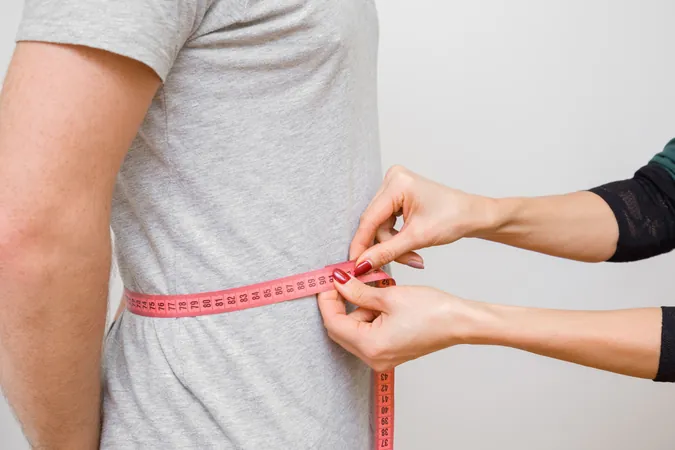
While traditional obesity metrics are prevalent, they often overlook crucial changes in muscle mass and body composition. The WWI, which accounts for waist circumference and weight, has emerged as a more precise measure, particularly in highlighting abdominal obesity and its implications for muscle quality and fat distribution.
A Deep Dive into the Research
To bridge the research gap, scientists analyzed data from the National Health and Nutrition Examination Survey (NHANES) collected from 2005 to 2018, specifically focusing on patients who self-identified as having osteoarthritis. Each patient's WWI was calculated by dividing waist circumference (in cm) by the square root of their weight (in kg), sorting participants into tertiles to categorize degrees of obesity.
Staggering Findings from the Analysis
Among the 3554 osteoarthritis patients in the study, the follow-up revealed that 13% had died, with 26% of deaths attributed to cardiovascular issues. Notably, deceased individuals were more likely to be older and predominantly non-Hispanic White, showcasing stark disparities in health outcomes.
The Grim Outlook of Higher WWI
Analysis through various Cox regression models consistently showed a clear and concerning association between higher WWI and increased risk of both all-cause and cardiovascular mortality. Those falling into the highest WWI tertile faced a staggering risk of all-cause mortality nearly three times greater than those in the lowest tertile.
A Call to Action
The findings highlight a pressing need for healthcare providers to utilize WWI measurements in mortality risk assessments for osteoarthritis patients. By doing so, they can better tailor strategies to manage obesity, thus enhancing patient care and potentially improving survival rates.
Looking Ahead: Limitations and Future Research
While the study presents significant insights, the authors point out the limitations inherent to observational research, which cannot definitively prove causation. Nonetheless, they remain optimistic, stating, "These results suggest that WWI could be vital for mortality predictions in osteoarthritis patients and underscore the importance of obesity management."



 Brasil (PT)
 Canada (EN)
 Chile (ES)
 Česko (CS)
 대한민국 (KO)
 España (ES)
 France (FR)
 Hong Kong (EN)
 Italia (IT)
 日本 (JA)
 Magyarország (HU)
 Norge (NO)
 Polska (PL)
 Schweiz (DE)
 Singapore (EN)
 Sverige (SV)
 Suomi (FI)
 Türkiye (TR)
 الإمارات العربية المتحدة (AR)