Smart Rings vs. Fitness Watches: Which Tracker Reigns Supreme?
2025-04-19
Author: Emily
The Intriguing Rise of Smart Rings
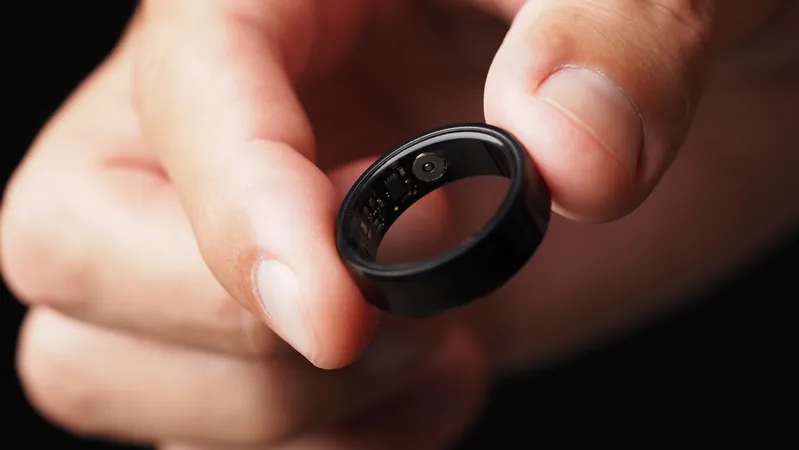
Smart rings may resemble simple accessories, but their advanced technology is revolutionizing health tracking. These compact devices boast sensors capable of monitoring heart rates, sleep quality, and other vital health metrics, making them competitive with traditional smartwatches. Lightweight, discreet, and undeniably stylish, it's no wonder smart rings are capturing attention in the tech world.
The Smart Ring Evolution
Though smart rings are relatively new—emerging over the last decade—they are quickly establishing themselves as frontrunners among fitness trackers. With popular options like the Oura Ring and Ultrahuman AIR Ring leading the charge, even tech giants like Samsung are getting in on the action. Speculation about Apple joining the fray abounds, though any concrete plans remain on the distant horizon.
Accuracy: Smart Rings vs. Fitness Watches
Experts caution that while smart rings are evolving rapidly, they currently offer fewer features than fitness watches. They lack functions like workout auto-detection and detailed exercise routing, leading many fitness aficionados to prefer their wrist-worn counterparts.
However, Dr. Robert Sackin, an engineer and patent attorney, highlights the potential of smart rings. He notes a significant rise in patent applications related to the Oura Ring, signaling industry innovation. With ongoing advancements in biometric technology, we may soon see rings that can track glucose levels, hydration, and blood pressure.
Exciting Medical Applications Ahead
Imagine smart rings capable of early detection of health issues like heart disease or diabetes. The integration of future smart rings with health apps and systems could provide users with a comprehensive view of their health, making it easier to share critical data with medical professionals.
Revolutionary Innovations on the Horizon
Researchers are already innovating with smart rings. From monitoring hand hygiene to detecting hand tremors linked to Parkinson's disease, these devices could transform the landscape of health tracking.
Heart Rate Monitoring: The Science Behind It
Smart rings measure heart rate using photoplethysmography (PPG), similar to smartwatches. However, they offer an advantage: fingers have a denser network of blood vessels close to the skin, potentially leading to more accurate heart rate readings. Studies indicate that smart rings might even provide better measurements in individuals with darker skin tones.
Limitations Still Exist
Despite their potential, experts caution against using smart rings as medical devices. Dr. Bhaskar Semitha emphasizes that while they can offer insights into heart health, they are no substitute for an ECG. Motion artifacts during exercise could lead to unreliable readings, underlining that wrist-worn devices currently outperform rings in dynamic situations.
Sleep Tracking: Smart Rings vs. Watches
Thanks to their comfort, smart rings excel at sleep tracking. However, they aren't foolproof; many underestimate REM sleep and are based on indirect indicators such as heart rate and movement rather than direct brain activity.
On the flip side, some rings, like the Oura Ring, utilize multiple data points to enhance sleep assessment, potentially outperforming many fitness watches geared primarily toward exercise.
The Final Verdict
So, when it comes to smart rings versus fitness watches, there’s no definitive winner in the accuracy and functionality arena. Both options come with their strengths and limitations. While neither offers 100% reliability, both can help in identifying patterns in health metrics.
The smartest approach? Consider smart rings as complimentary tools that track trends rather than as alternatives to medical evaluations. As technology progresses, their evolving capabilities are bound to make them even more formidable in the future.



 Brasil (PT)
 Canada (EN)
 Chile (ES)
 Česko (CS)
 대한민국 (KO)
 España (ES)
 France (FR)
 Hong Kong (EN)
 Italia (IT)
 日本 (JA)
 Magyarország (HU)
 Norge (NO)
 Polska (PL)
 Schweiz (DE)
 Singapore (EN)
 Sverige (SV)
 Suomi (FI)
 Türkiye (TR)
 الإمارات العربية المتحدة (AR)