Trump's Aggressive Attack on Fed Chair Sparks Market Turmoil: What's Next?
2025-04-21
Author: Michael
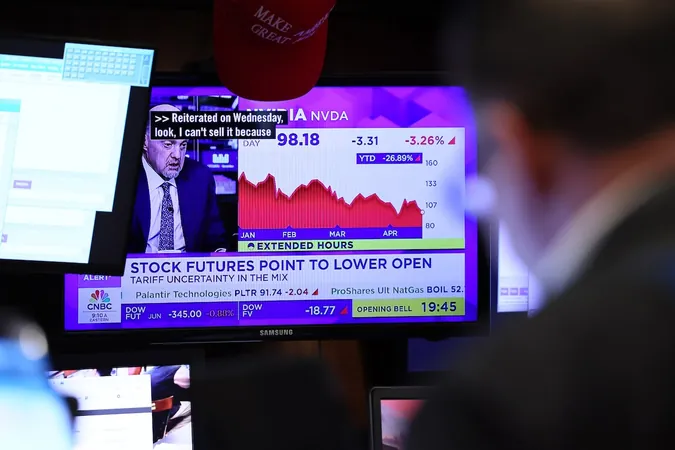
In a stunning turn of events, President Donald Trump has reignited his fierce criticism of Federal Reserve Chair Jerome Powell, sending waves of panic through the financial markets. With the threat of rising interest rates looming over the economy, investors are left scrambling to understand the implications of Trump's bold move.
This latest tirade from Trump comes as Powell has issued warnings about the potential impact of the ongoing trade war on inflation, raising concerns that the Fed might need to hike interest rates again. Trump, who handpicked Powell during his first term, has always been an advocate for low rates to boost economic growth. His frustration boils over as he fears the Fed's actions could cool off the economy ahead of crucial elections.
On Monday, Trump took to social media to deliver another scathing remark, dubbing Powell "Mr. Too Late"—a jab at the Fed's delayed response in tackling inflation last year. This escalation in rhetoric seems to have sent the markets into a tailspin, with major U.S. indexes plummeting over 2% and the U.S. dollar hitting a three-year low against other currencies. Treasury yields also surged, indicating a shift in investor sentiment towards these traditionally safe investments.
Amidst this turmoil, whispers from within the Trump administration suggest that some cabinet members, including Treasury Secretary Scott Bessent, are working discreetly to manage the situation and prevent drastic measures from the President. The independence of the Federal Reserve is seen as crucial to maintaining economic stability and preventing political interference in critical financial decisions.
Despite Wall Street’s attempts to remain optimistic, the emerging narrative suggests that Trump's unpredictable policies could leave investors guessing about which initiatives will stick. The uncertainty has prompted a retreat from the U.S. dollar and Treasury bonds, previously viewed as safe havens.
"Countries with an independent central bank tend to have better economic outcomes, said Jed Ellerbroek from Argent Capital Management. "When politicians try to exert influence over the Fed, it becomes a scary prospect for the market." Concerns about inflation remain high, with the Fed cautious to lower rates too quickly for fear of reigniting economic instability.
In his Monday remarks, Trump suggested that Powell could be undermining his economic efforts, even hinting that Powell had acted in favor of Democrats by cutting rates before the 2020 election. However, it’s important to note that these cuts were largely aimed at shielding the economy from the catastrophic effects of the pandemic.
Despite the political unrest and Trump's aggressive posturing, the underlying U.S. economy appears resilient. Early earnings reports show that 68% of companies have surpassed Wall Street predictions, and job growth has remained robust.
Powell, for his part, is standing firm, insisting he won’t be intimidated into resigning until his term ends in 2026. Any attempts by Trump to remove him could spiral into a high-stakes legal battle.
As the markets grapple with these developments, the S&P 500 closed 16% down from its record, teetering on the brink of a bear market. While most sectors faced declines, materials saw a slight uptick, buoyed by a rise in gold futures.
With this unpredictable saga continuing to unfold, investors are left asking—what will be Trump's next move, and how will it shape the economic landscape?


 Brasil (PT)
 Canada (EN)
 Chile (ES)
 Česko (CS)
 대한민국 (KO)
 España (ES)
 France (FR)
 Hong Kong (EN)
 Italia (IT)
 日本 (JA)
 Magyarország (HU)
 Norge (NO)
 Polska (PL)
 Schweiz (DE)
 Singapore (EN)
 Sverige (SV)
 Suomi (FI)
 Türkiye (TR)
 الإمارات العربية المتحدة (AR)