Trump's Trade War: A Series of Retreats and Reassessments
2025-04-23
Author: Michael
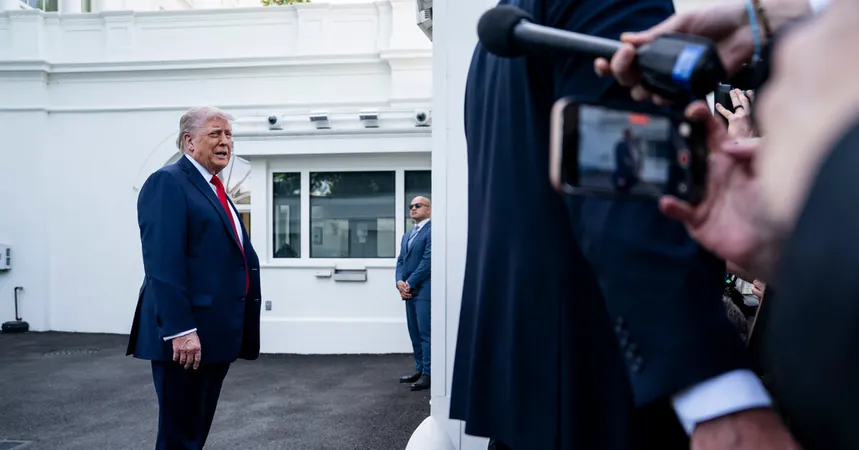
In a striking reversal of fortunes, President Trump’s recent actions highlight a president caught in the throes of escalating trade tensions. After weeks of tough rhetoric, he has begun to back down on significant economic threats.
First, Trump receded from his alarming suggestion to fire Federal Reserve Chairman Jerome Powell, recognizing the dire implications of his tenure, especially as the S&P 500 reflects a notable decline since his presidency began.
Just two weeks after announcing a staggering 145 percent tariff on Chinese imports, Trump admitted the situation was unsustainable. This acknowledgment was driven by concerns voiced by major retailers like Target and Walmart, cautioning that price hikes and empty shelves were imminent.
Trump’s own hardline approach has resulted in an unexpected wake-up call, revealing the intricate challenges of modern supply chains. Initially, he envisioned a straightforward scenario where heavy tariffs would compel companies to establish operations in the U.S., but reality has painted a much more complicated picture.
Despite the White House’s narrative claiming Trump’s aggressive strategy was a masterstroke that had lined up 90 countries, the truth is that global economic forces are pushing back. Press Secretary Karoline Leavitt urged patience, hinting at future concessions, but uncertainty looms large.
Meanwhile, Trump attempted to maintain a façade of control by stating that everything was still on track and claiming a return to the prosperous years of 1870-1913. Yet, the White House atmosphere was anything but cheerful.
The President’s bitter frustration with Powell only deepened when he labeled him "Mr. Late" for not cutting interest rates. With looming recession fears, Trump has been quick to place any future blame on Powell if the market downturn continues.
The threat to fire Powell, although lacking any real power, unleashed a new wave of market instability. However, just days later, Trump seemed to soften his stance, publicly declaring he had no intention to dismiss Powell, stabilizing the market amid turmoil.
As for the trade war with China, there are signs that both sides might seek a way out. The White House hinted at potential negotiations despite indications that China may be biding its time, waiting for Trump to feel the full impact of his own policies. Notably absent was any communication from President Xi Jinping, further hinting at a diplomatic standoff.
Treasury Secretary Scott Bessent has emerged as a reluctant messenger, emphasizing that today’s tariff situation is not tenable, thus hinting at the dire need for de-escalation. However, he warned that finding common ground with China would be a slow and taxing process.
Internally, some Trump officials concede that they underestimated China's resilience. Historically, Beijing was caught off guard by Trump's earlier tariffs, but now they appear poised and prepared for prolonged conflict.
By mid-week, Trump was again reevaluating the environment surrounding the tariffs, alluding to a potential reduction. On the flip side, the administration has been clear that any concession will depend on fresh trade agreements, signaling a confusing trajectory.
Meanwhile, nations around the globe, from Russia under Putin to Iran, are closely monitoring the situation, looking for cracks in America’s stance. Experts suggest that Trump’s lack of awareness of China’s economic leverage and retaliatory capabilities is putting the U.S. in a vulnerable position.
As this high-stakes game of economic brinkmanship plays out, the long-term effects remain uncertain, and the world is watching to see how this theatrical trade affair unfolds.


 Brasil (PT)
 Canada (EN)
 Chile (ES)
 Česko (CS)
 대한민국 (KO)
 España (ES)
 France (FR)
 Hong Kong (EN)
 Italia (IT)
 日本 (JA)
 Magyarország (HU)
 Norge (NO)
 Polska (PL)
 Schweiz (DE)
 Singapore (EN)
 Sverige (SV)
 Suomi (FI)
 Türkiye (TR)
 الإمارات العربية المتحدة (AR)