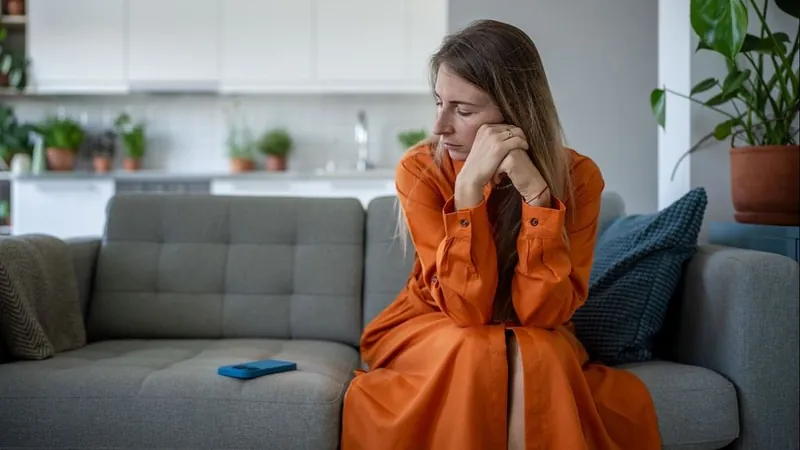
Unlocking Mental Health: How Smartphones Could Revolutionize Depression Therapy
2025-04-24
Author: Amelia
Smartphones: The Unexpected Ally for Mental Health
Recent research is flipping the script on smartphones. Often blamed for exacerbating mental health issues, these pocket-sized devices might actually be a lifeline for those grappling with low-level depression.
A Hidden Epidemic of Mild Depression
Did you know that approximately 11% of people worldwide experience what's known as 'subthreshold depression'? This condition, while not severe enough to be classified as major depressive disorder, can still significantly affect a person's quality of life.
Cognitive Behavioral Therapy (CBT): The Gold Standard
Cognitive Behavioral Therapy, or CBT, is widely regarded as the top-tier treatment for mental health issues, helping individuals tackle unhealthy thoughts and behaviors. Remarkably, it can often provide results comparable to medication. Yet, with a global shortage of mental health professionals, many people still find themselves without access to this vital care.
Bridging the Gap with a Smartphone App
Enter a groundbreaking study published in *Nature Medicine*, which explored whether a CBT-centric app could help close this gap. This innovative app aims to equip users with five essential CBT skills: engaging in mood-enhancing activities, reframing negative thoughts, improving problem-solving capabilities, communicating without causing harm, and ensuring restful sleep.
Toshiaki Furukawa, the lead author and professor at Tokyo University, emphasized the importance of accessibility, stating, Our goal was to make these skills available to anyone, anywhere.
Promising Results from a Pioneering Study
In a significant trial, nearly 4,000 Japanese adults with subthreshold depression were randomly divided into two groups: one with access to the app and one without. After six to ten weeks, users of the app reported noticeable improvements in mental health, exhibiting reduced levels of depression, anxiety, and insomnia—even six months post-study.
A Mixed Bag of Effectiveness
While these findings are promising, the effectiveness of CBT apps varies. Some studies have shown mixed results, with short phone-based interventions yielding minimal improvement in mental wellness for certain demographics. For instance, those without a history of major depressive episodes didn't benefit as much.
Interestingly, some CBT techniques showed more efficacy than others; mood-enhancing activities and sleep improvement strategies were particularly beneficial in relieving anxiety and fostering positive mental health.
A Tailored Approach to Mental Health
Looking ahead, researchers are planning to conduct longer trials tailored to individual mental health challenges. Furukawa expressed optimism, saying, We can use this knowledge to personalize and optimize which skills to administer for each individual to match their needs and characteristics. This opens the door to optimized, long-term support.
The Future of Mental Health Care is Here
With the integration of technology and mental health care, smartphones could emerge as indispensable tools for supporting those in need, offering accessible and effective solutions at a time when mental health support is more critical than ever.



 Brasil (PT)
 Canada (EN)
 Chile (ES)
 Česko (CS)
 대한민국 (KO)
 España (ES)
 France (FR)
 Hong Kong (EN)
 Italia (IT)
 日本 (JA)
 Magyarország (HU)
 Norge (NO)
 Polska (PL)
 Schweiz (DE)
 Singapore (EN)
 Sverige (SV)
 Suomi (FI)
 Türkiye (TR)
 الإمارات العربية المتحدة (AR)