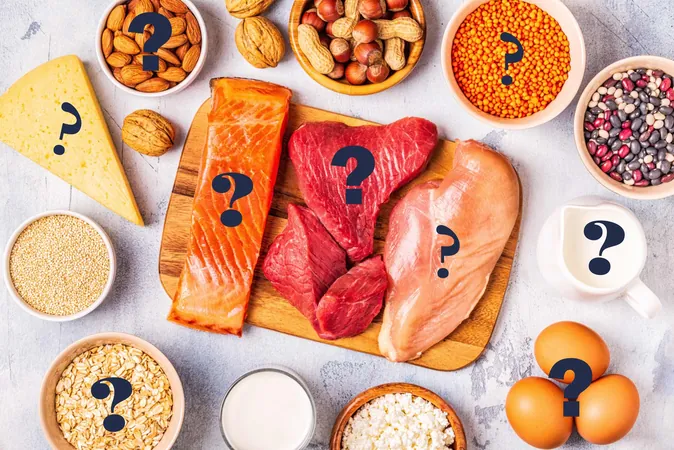
Unlocking the Protein Puzzle: How Much Do You Really Need?
2025-04-18
Author: Emma
Navigating the Protein Overload
With a surge of protein-packed products crowding grocery shelves and trending diets dominating social media, figuring out your protein needs can be a challenge. To cut through the confusion, we turned to Melanie Brede, a registered nutritionist from the University of Virginia, for some crucial insights.
How Much Protein Is Enough?
For the average healthy person, the magic number is about one gram of protein for every two pounds of body weight, equating to 0.8 grams per kilogram. For example, if you weigh 160 pounds, you should aim for roughly 80 grams of protein daily. Brede recommends using your hand to gauge portions—a hamburger the size of your palm typically has around 40 grams of protein. "That’s half your daily needs right there!" Brede points out.
Do Active Individuals Need More Protein?
Most of us don’t need more protein just because we exercise. Light activities like leisurely walks or basic aerobics won’t significantly ramp up your protein requirements. However, if you're a serious endurance athlete, aiming for 1.2 to 1.6 grams per 2.2 pounds may be necessary, while those lifting heavy weights might target about 2 grams. But here's the catch: your body becomes more efficient at utilizing protein as you get fitter, which means beginners might need that extra boost as they start their journeys.
Can You Get Sufficient Protein on a Plant-Based Diet?
Absolutely! For vegans and vegetarians, there’s a wealth of protein sources available. Foods like beans, nuts, tofu, and even whole grains like rice and pasta pack a protein punch. Brede emphasizes that even vegetables like carrots and broccoli contribute to your protein intake.
When Is It Time to Increase Your Protein?
If you’re in a phase of growth—be it muscle building or cellular regeneration during pregnancy—you may need more protein. Additionally, some studies suggest that women during menopause might benefit from slightly upping their intake. As you age, spreading your protein intake throughout the day becomes crucial for optimal muscle building. Brede likens it to constructing a wall: having enough bricks (protein) matters, but how you lay them (distributing intake) really counts.
Are Protein Supplements Worth It?
With protein bars, shakes, and powders everywhere, convenience is key. While these supplements can help you hit your protein goals, they often rely on whey, pea, or soy proteins. However, Brede advocates a "food-first" approach, warning that relying solely on supplements sacrifices the broader nutritional benefits found in whole foods like scrambled eggs.



 Brasil (PT)
 Canada (EN)
 Chile (ES)
 Česko (CS)
 대한민국 (KO)
 España (ES)
 France (FR)
 Hong Kong (EN)
 Italia (IT)
 日本 (JA)
 Magyarország (HU)
 Norge (NO)
 Polska (PL)
 Schweiz (DE)
 Singapore (EN)
 Sverige (SV)
 Suomi (FI)
 Türkiye (TR)
 الإمارات العربية المتحدة (AR)