Urgent Action Required to Tackle Chronic Wasting Disease at Farm Hotspots, New Study Reveals
2025-04-23
Author: Amelia
Farmers and Wildlife Managers Must Take Comprehensive Measures
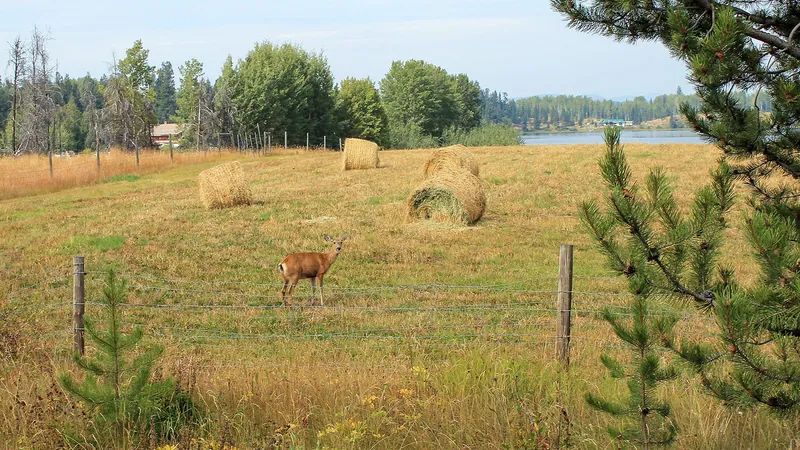
A groundbreaking study has unveiled alarming insights into how chronic wasting disease (CWD) spreads among deer, particularly in farms where artificial food sources, like stored crops and hay bales, act as major attractants. The research, led by Kelsey Gritter for her master's thesis in ecology, emphasizes that merely reducing these food hotspots can inadvertently worsen the disease's proliferation.
Understanding Chronic Wasting Disease: A Growing Threat
CWD is a fatal illness that targets the central nervous system of cervids, including deer, elk, and moose. Alberta has been monitoring this disease since 1998, and the findings are concerning—some regions report infection rates exceeding 75% among mule deer males. CWD spreads not only through direct animal contact but also via prions shed in bodily fluids, creating environments rife for infection.
The Dangers of Artificial Attractants
These artificial food sources create environments where deer congregate, significantly heightening their chances of spreading CWD. Gritter warns, "Artificial attractants can lead to unnaturally high deer gatherings in specific areas, directly influencing the transmission of the disease." Furthermore, these attractants might push deer to wander beyond their natural ranges, increasing interactions with other groups and potentially spreading the disease.
Innovative Research Methods and Key Findings
To assess the impact of these artificial attractants, Gritter and her team analyzed behavioral data from tagged mule deer, focusing on group sizes, customary roaming areas, and environmental preferences. By tracking their movements every two hours, they could simulate how different configurations of attractants affected deer behavior.
Surprisingly, the study revealed that reducing some attractants, while keeping others available, increased contact rates amongst different groups. This outcome suggests that removing only a portion of these attractants isn't an effective strategy; rather, complete removal of all attractants in a given area is essential for reducing disease transmission.
Looking Ahead: Strategies for Combatting CWD
While the computer simulations focused on moderate mule deer populations, Gritter stresses the need for further research to fully understand how deer population sizes impact these findings. The call for action is clear: farmers and wildlife managers must adopt an all-encompassing strategy to effectively combat the spread of CWD.
With ongoing surveillance and innovative management strategies, we stand at a critical juncture in our fight against this devastating disease, and proactive steps must be taken to protect our wildlife.



 Brasil (PT)
 Canada (EN)
 Chile (ES)
 Česko (CS)
 대한민국 (KO)
 España (ES)
 France (FR)
 Hong Kong (EN)
 Italia (IT)
 日本 (JA)
 Magyarország (HU)
 Norge (NO)
 Polska (PL)
 Schweiz (DE)
 Singapore (EN)
 Sverige (SV)
 Suomi (FI)
 Türkiye (TR)
 الإمارات العربية المتحدة (AR)