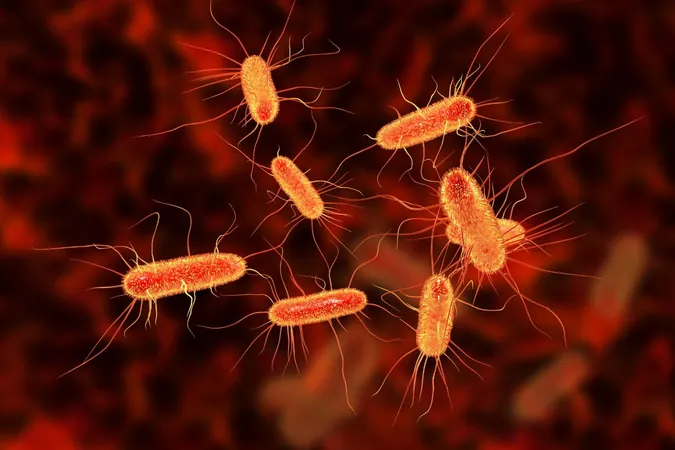
A Shocking Link: Gut Bacteria Could Be Fueling Rates of Colorectal Cancer in Young Adults
2025-04-25
Author: Kai
A Bacterial Villain Revealed
Recent research has unveiled a disturbing connection between a common gut bacterium and rising cases of colorectal cancer in young adults. Scientists at the University of California, San Diego have found that a toxin produced by certain strains of Escherichia coli, known as colibactin, may be a significant trigger for early onset colorectal cancer.
The Alarming Rise in Colorectal Cancer Cases
Colorectal cancer ranks as the fourth most common cancer in the United States, with around 150,000 people diagnosed each year and about 50,000 fatalities annually. While the overall rates of this cancer have been dropping, there is a troubling increase among younger and middle-aged adults. Between 2012 and 2021, the American Cancer Society reported a 2.4% annual increase in colorectal cancer cases among individuals under 50.
A Study with Surprising Findings
Initially, researchers aimed to study the global variation in colorectal cancer rates. By analyzing genetic samples from nearly 1,000 individuals worldwide, they stumbled upon a concerning trend: colibactin-related mutations were found three times more often in early onset cancers than in their late counterparts. This suggests that colibactin might play a crucial role in the development of colorectal cancer, particularly in younger patients.
A Historical Record of Mutation
The patterns of mutations linked to colibactin appear to act as a 'historical record' in our DNA, hinting at early exposure as a catalyst for these cancers. "These mutation patterns point to early-life exposure to colibactin as a driving force behind early-onset disease," stated Ludmil Alexandrov, the study's senior author.
A Bigger Picture?
While colibactin is identified as a major player, the researchers caution that it's merely one piece of a complex puzzle. They noted that regions with lower incidences of colorectal cancer often had fewer cases of colibactin-related mutations, suggesting that other environmental factors—like diet and antibiotic use—may also influence the prevalence of these harmful E. coli strains.
Hope for the Future: Potential Interventions
These groundbreaking findings pave the way for future research exploring the possibility of probiotics to combat harmful bacteria and developing early detection tests for colibactin-related mutations. The researchers are eager to pursue these avenues, but their ambitions hinge on securing further funding to sustain their critical work.
Funding Challenges Ahead
The urgency of this research is compounded by funding cuts from the National Institutes of Health (NIH) under recent government policies, which threaten to hinder vital cancer studies. Alexandrov expressed concern about the long-term impact these funding challenges could have on cancer research not only in the U.S. but globally.
As scientists grapple with these funding issues, the pressing need to decode the mysteries of colorectal cancer continues, with hopes that such research can turn the tide against the alarming rise in cases among young adults.




 Brasil (PT)
 Canada (EN)
 Chile (ES)
 Česko (CS)
 대한민국 (KO)
 España (ES)
 France (FR)
 Hong Kong (EN)
 Italia (IT)
 日本 (JA)
 Magyarország (HU)
 Norge (NO)
 Polska (PL)
 Schweiz (DE)
 Singapore (EN)
 Sverige (SV)
 Suomi (FI)
 Türkiye (TR)
 الإمارات العربية المتحدة (AR)