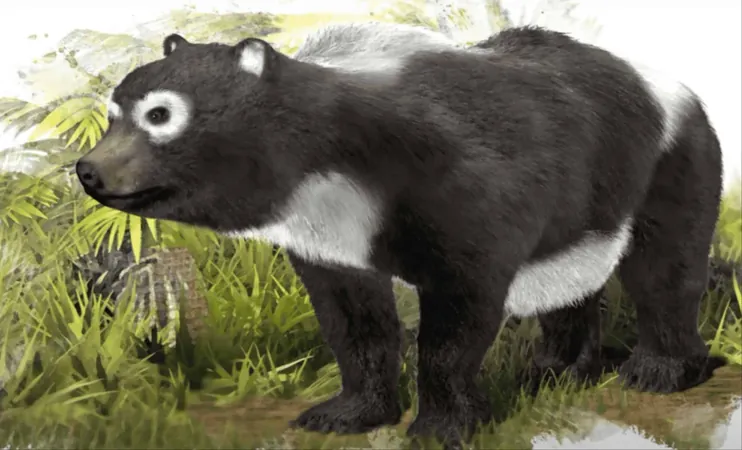
Ancient Panda Discovery in Germany Reveals Shocking Dietary Secrets
2025-04-24
Author: Jessica Wong
11-Million-Year-Old Fossil: A Game Changer for Panda Evolution
In a stunning archaeological find in southern Germany, scientists have unearthed the 11-million-year-old fossil of Kretzoiarctos beatrix, an ancient ancestor of the giant panda. This groundbreaking discovery, made at the Hammerschmiede site in Allgäu, has overturned the conventional belief that pandas have always adhered to a bamboo-only diet.
The fossil represents the first evidence of pandas thriving in Europe, and its analysis reveals that these ancient creatures enjoyed a much broader diet that included both plants and meat. This shift in understanding highlights that the evolution toward a bamboo-based diet happened much later in their lineage, broadening our perspective on the dietary habits of early pandas.
Dietary Surprises: The Omnivorous Ancestor of Pandas
Unlike the modern giant panda, known for its exclusive bamboo munching, Kretzoiarctos beatrix was an omnivore. Paleontologists rigorously analyzed its fossilized teeth, comparing them to those of various bear species, including polar and brown bears. The results indicate that Kretzoiarctos had a diet reminiscent of today’s brown bears, consuming a mix of both plant and animal matter.
Professor Madelaine Böhme from the Senckenberg Centre for Human Evolution and Palaeoenvironment emphasized the significance of these findings. She explained, "These results are crucial for understanding bear evolution and the shift to herbivory in giant pandas. Kretzoiarctos beatrix was a dietary generalist, and specialization towards a bamboo diet only occurred later in panda evolution."
Teeth Tell Tales: The Dietary Diversity of Kretzoiarctos
Examining the macro- and micromorphology of Kretzoiarctos' teeth offered fascinating insights: they lacked adaptations for consuming tough fibrous plants like those in today’s pandas. Instead, the scratches and pits on their teeth suggest they grazed on a variety of foods, possibly even chewing on bones, reflecting a diet that was both versatile and opportunistic.
A Glimpse into an Ancient Ecosystem
Hammerschmiede, the discovery site, is a treasure trove of fossil evidence, painting a vivid picture of an ecosystem that thrived 11 million years ago. Alongside Kretzoiarctos, researchers identified 27 predator species, including saber-toothed tigers, hyenas, and otter-like animals, indicating a rich diversity of life in this forest-laden river landscape.
The presence of these varied species suggests a cooperative ecological scenario where animals could coexist within the same niche. Dr. Nikolaos Kargopoulos noted that despite four distinct otter-like species sharing similar sizes and diets, they managed to thrive without fierce competition for resources, indicating that the environment was bountiful enough to support them all.
 Brasil (PT)
 Canada (EN)
 Chile (ES)
 Česko (CS)
 대한민국 (KO)
 España (ES)
 France (FR)
 Hong Kong (EN)
 Italia (IT)
 日本 (JA)
 Magyarország (HU)
 Norge (NO)
 Polska (PL)
 Schweiz (DE)
 Singapore (EN)
 Sverige (SV)
 Suomi (FI)
 Türkiye (TR)
 الإمارات العربية المتحدة (AR)