Can Lichens Conquer Mars? The Incredible Survival Skills of Earth’s Resilient Organisms
2025-04-19
Author: Ken Lee
Are Life Forms Ready for Mars?
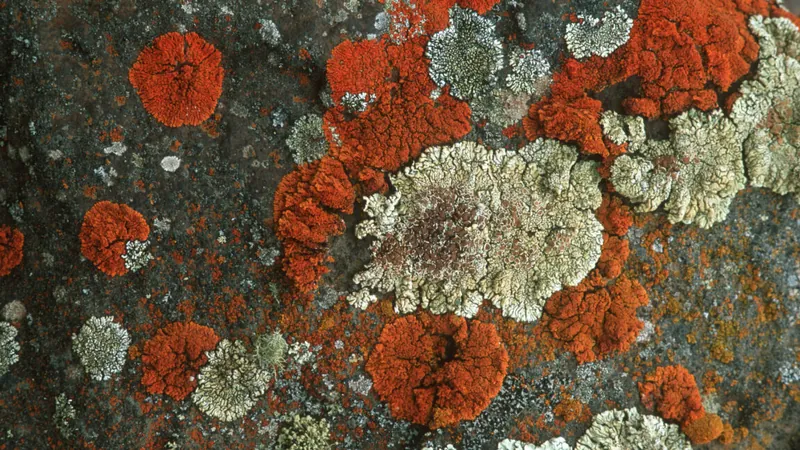
While the possibility of life existing on Mars remains a tantalizing mystery, recent research suggests that Earth's toughest inhabitants, lichens, could potentially survive on the red planet. Mars, with its frigid temperatures, brutal radiation, and thin atmosphere, poses a formidable challenge for any form of life. However, lichens, which thrive in some of Earth's harshest conditions, have shown remarkable resilience.
The Marvelous World of Lichens
Lichens are unique symbiotic organisms, made up primarily of fungi (about 90%) paired with photosynthetic partners like algae or cyanobacteria. To investigate their survival potential on Mars, a team led by botanist Kaja Skubała conducted innovative experiments at the Space Research Center of the Polish Academy of Sciences, focusing on two lichen species: Diploschistes muscorum and Cetrarea aculeata.
Breaking New Ground in Astrobiology Research
Their groundbreaking study, published in IMA Fungus, unveiled that these lichens not only survived but actively metabolized even under Mars-like conditions. The researchers noted, "Our study is the first to demonstrate that the metabolism of the fungal partner in lichen symbiosis was active while being in a Mars-like environment." This opens up new possibilities for understanding the resilience of life beyond Earth.
Radiation: A Deadly Challenge
While Martian radiation is deadly to most life forms, significantly damaging cellular structures, lichens possess unique survival traits. Their low metabolism, minimal nutritional needs, and incredible longevity allow them to endure extreme conditions. Similar to the infamous tardigrades, lichens can enter a dormant state, waiting for water to revive their metabolic functions.
Experimental Conditions Mimic Martian Environment
In a controlled chamber, researchers subjected the lichens to extreme low pressure, reduced humidity, carbon dioxide-rich atmosphere, and fluctuating temperatures, simulating both day and night on Mars. Astonishingly, even in such inhospitable circumstances, both lichen species managed to retain moisture, indicating ongoing metabolic activity.
The Resilience of D. muscorum
Results showed that D. muscorum was significantly more resistant to ionizing radiation than its counterpart, C. aculeata, exhibiting lower levels of oxidative stress and cellular damage. Researchers theorized that while Martian conditions could affect lichen metabolism, the symbiotic relationship might enable these organisms to adapt and even thrive.
Future Martian Missions Could Be Aided by Lichens?
The implications of this research are monumental. If lichens can withstand the rigors of Mars, they could serve as a model for future life support systems in Martian colonization. Skubała concluded, "Our findings lay the foundation for future studies, including long-term exposure experiments on the Martian surface.
What Lies Ahead?
While we have yet to send organisms intentionally to Mars, the prospect of lichens surviving the harsh Martian environment beckons a new era in astrobiology and space exploration. Scientists are excited to explore how these extraordinary life forms might aid humanity in its quest to become an interplanetary species.

 Brasil (PT)
 Canada (EN)
 Chile (ES)
 Česko (CS)
 대한민국 (KO)
 España (ES)
 France (FR)
 Hong Kong (EN)
 Italia (IT)
 日本 (JA)
 Magyarország (HU)
 Norge (NO)
 Polska (PL)
 Schweiz (DE)
 Singapore (EN)
 Sverige (SV)
 Suomi (FI)
 Türkiye (TR)
 الإمارات العربية المتحدة (AR)