Could This $10 Weightlifting Supplement Revolutionize Depression Treatment?
2025-04-25
Author: Ying
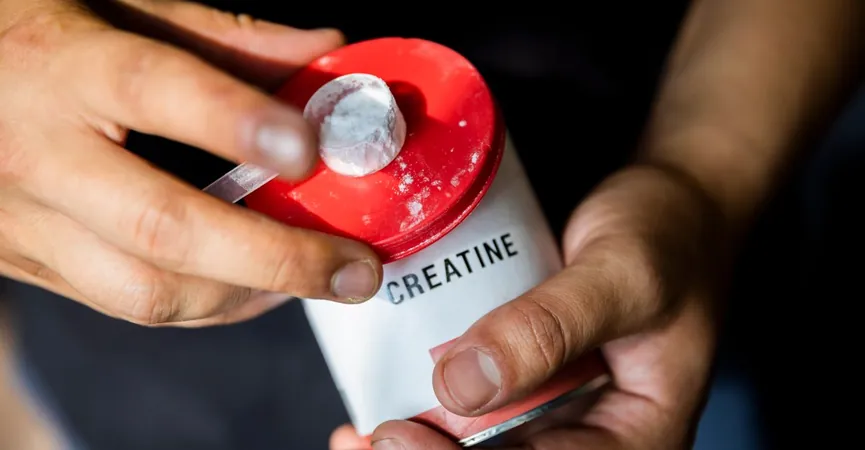
Creatine: More Than Just a Gym Favorite
Creatine, the go-to supplement for fitness enthusiasts and bodybuilders, is stepping into an unexpected spotlight: mental health treatment. For decades, we've known creatine's power in muscle energy production, thanks to research dating back to the 1830s. Its rise in public consciousness kicked off in the '90s, when Swedish studies showcased its ability to enhance stamina and recovery during high-intensity workouts, making it a staple in gyms across America.
With an average price of just $17 for a 10-ounce jar, it's no wonder that around 25% of adults report using creatine, contributing to a staggering $400 million market in the U.S. annually. A meta-analysis in 2018 even crowned it the ‘most effective nutritional supplement’ for athletes, boasting a clean safety profile with no detected harmful side effects.
From Lifting Weights to Lifting Spirits
But here's the twist: creatine may offer more than just physical benefits. In the early 2000s, researchers began to connect the dots between creatine’s role in brain function and its potential in alleviating depression. If creatine enhances our brain's ability to convert nutrients into energy, could increasing its levels combat common mental health issues?
Recent studies support this intriguing hypothesis. Initial clinical trials indicated that creatine can enhance the effectiveness of typical depression treatments like antidepressants and cognitive behavioral therapy (CBT), allowing patients to achieve relief quicker and minimize the chances of recurring bouts of depression.
A Groundbreaking Study from India
Now, a new study from Dehradun, India, raises the stakes even higher. This small but intriguing trial, involving 100 participants, was led by Nima Norbu Sherpa and funded by a local charity. Given the context—less access to traditional mental health resources in the area—creatine could be a game-changer due to its affordability and easy self-administration.
Participants were divided into two groups: one received daily doses of 5 grams of creatine along with talk therapy, while the other was given a placebo alongside the same therapy. After eight weeks, while both groups showed improvement, those who included creatine reported significantly better outcomes, with an average depression scale score dropping to 5 for the creatine group compared to 11 for the placebo group.
Remarkably, 11 individuals taking creatine achieved remission compared to just five in the placebo group. Though both groups saw similar rates of discontinuation, the side effects experienced by creatine users were mild.
Cautious Optimism and the Road Ahead
While the results are captivating, experts urge caution. Riccardo De Giorgi, a co-author of the study, stresses that these findings are preliminary and should be interpreted carefully. The dropout rate indicates there's still a need for more rigorous, large-scale studies to validate these promising results.
Peter Attia, a physician specializing in longevity, echoes this sentiment, noting that due to creatine's widespread use, it could easily be added to existing treatment plans for those seeking to enhance their mental health without drastic changes. Its low cost positions it as a potential lifeline for those lacking access to traditional mental health care.
As mental health challenges continue to mount globally, the introduction of affordable solutions like creatine could represent a crucial step toward helping the two-thirds of the world's population who currently lack access to conventional treatments. If creatine can indeed serve as a viable mental health aid, we may be on the brink of a breakthrough.


 Brasil (PT)
 Canada (EN)
 Chile (ES)
 Česko (CS)
 대한민국 (KO)
 España (ES)
 France (FR)
 Hong Kong (EN)
 Italia (IT)
 日本 (JA)
 Magyarország (HU)
 Norge (NO)
 Polska (PL)
 Schweiz (DE)
 Singapore (EN)
 Sverige (SV)
 Suomi (FI)
 Türkiye (TR)
 الإمارات العربية المتحدة (AR)