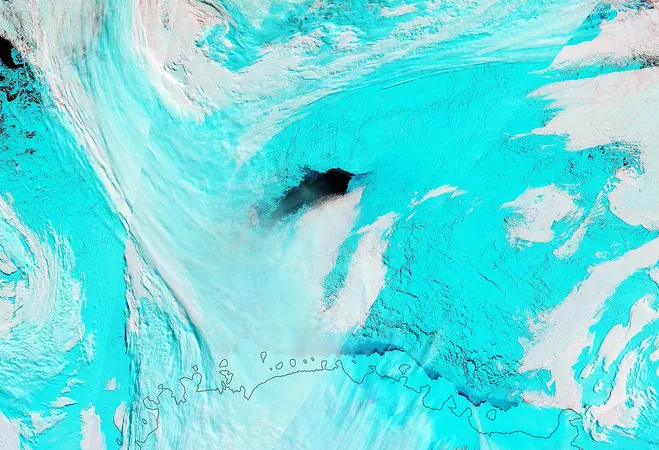
Enormous Antarctic Ice Hole: Unraveling the Mystery Behind the Polynya
2025-04-23
Author: Ting
A Breathtaking Discovery in Antarctica
Imagine a dark, massive opening in the Antarctic sea ice—an unexpected sight that left NASA scientists stunned. This unprecedented phenomenon, known as a polynya, ballooned to a size comparable to Switzerland and lingered for weeks, raising eyebrows and questions alike.
What Is a Polynya?
Polynyas are natural openings in sea ice that usually form in the Southern Ocean, where layers of cold, fresh water float atop saltier, warmer depths. For one to form in the open ocean, this delicate balance must be disrupted, leading to a fascinating process involving seawater dynamics.
The Role of Maud Rise
Located above the submerged plateau known as Maud Rise, this enormous hole in the ice is not just a random occurrence. Historical data reveals that similar holes have appeared there before, particularly during winters from 1974 to 1976, suggesting an intriguing connection between the topography and the formation of polynyas.
Unpacking the Mystery
To investigate this 2017 phenomenon, scientists employed robotic floats and tracked elephant seals while utilizing advanced ocean models. The findings indicated a remarkable interaction: a swift Weddell Gyre had brought warmer, salty water closer to the surface, creating conditions ripe for polynya formation.
Storms: Nature’s Architects
Adding to this intriguing mix were intense extratropical storms that flung ice away and directed salty water toward Maud Rise. Atmospheric rivers, carrying warm, moist air, further destabilized the conditions, allowing heat to escape and maintaining the polynya.
The Power of Ekman Transport
A key factor identified was Ekman transport, a phenomenon where wind influences ocean currents, effectively guiding saltier water to the right spot. This intricate interplay helped sustain the polynya, enabling it to release an astounding amount of heat—over twenty times the usual measure before ice reformed.
Global Consequences of a Local Event
Although it may seem like a localized event, the impact of this polynya reaches far and wide, modifying global ocean currents and climate. Such openings can alter water movement and heat distribution on a grand scale, reminding us of just how interconnected our planet is.
Future Implications
As climate change continues to shift weather patterns, scientists are keenly observing what may happen in the coming winters. The trends indicate a troubling decline in Antarctic sea ice, raising concerns about the increasing frequency of such exceptional phenomena and the broader implications for our planet’s climate stability.
The riveting study behind this remarkable discovery has been published in the journal Science Advances, highlighting our need to remain vigilant about changes in our world’s frozen frontiers.
 Brasil (PT)
 Canada (EN)
 Chile (ES)
 Česko (CS)
 대한민국 (KO)
 España (ES)
 France (FR)
 Hong Kong (EN)
 Italia (IT)
 日本 (JA)
 Magyarország (HU)
 Norge (NO)
 Polska (PL)
 Schweiz (DE)
 Singapore (EN)
 Sverige (SV)
 Suomi (FI)
 Türkiye (TR)
 الإمارات العربية المتحدة (AR)