Explosive Testimony: Instagram Co-Founder Claims Meta Stifled Growth After Acquisition
2025-04-22
Author: Wai
Instagram's Co-Founder Unleashes Truth Bombs in Meta Trial
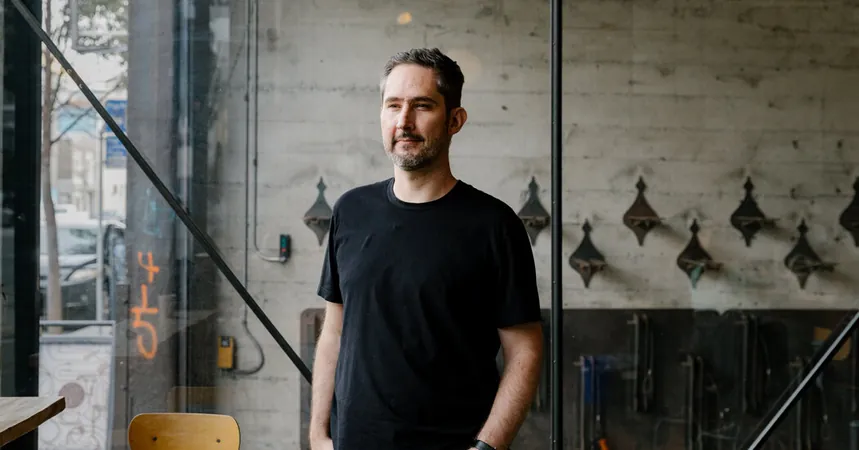
In a gripping federal antitrust trial, Instagram co-founder Kevin Systrom took the stand on Tuesday, revealing that after Meta’s acquisition of the photo-sharing platform, it was systematically denied crucial resources. Systrom claimed that Mark Zuckerberg, Meta's CEO, viewed Instagram as a potential threat to his empire.
"Mark was not investing in Instagram because he believed we were a threat to their growth," Systrom said, shedding light on his tumultuous relationship with the tech giant.
A Buy-or-Bury Strategy?
Systrom’s extensive six-hour testimony bolstered the government's argument that Meta pursued a "buy-or-bury strategy," aimed at extinguishing competition to solidify its dominance in social media. Despite pocketing millions when Meta acquired Instagram for $1 billion back in 2012, Systrom's claims starkly contradicted Zuckerberg's recent assertions.
While Zuckerburg claimed the company invested heavily in Instagram post-acquisition, Systrom revealed his frustration, stating that when he departed Meta in 2018, Instagram had reached a staggering one billion users yet possessed only a fraction of Facebook's workforce—1,000 compared to Facebook's 35,000. He insisted, "We were by far the fastest-growing team... I felt like we should have been much larger based on our success."
Broader Implications for the Tech Industry
The trial, Federal Trade Commission (FTC) v. Meta Platforms, comes at a crucial time for U.S. antitrust actions against Big Tech. The government argues that Meta's acquisitions of Instagram and WhatsApp in 2014 for $19 billion disrupted market competition and stifled innovation.
In defending its actions, the FTC is seeking to dismantle Meta's vast advertising empire, which generates approximately $165 billion annually, threatening to alter the landscape for 3.5 billion users reliant on its platforms. Systrom's testimony echoes broader sentiments within Congress and regulatory agencies about the unchecked power of major tech firms.
Key Takeaways from the In-Depth Testimony
During the trial, Systrom described Instagram's explosive growth since its inception in 2010, boasting 25,000 users on its first day and ballooning to four million new users per month by January 2012. Yet, his relationship with Zuckerberg was complicated—when questioned by the FTC, Systrom acknowledged that Zuckerberg perceived Instagram as an emotional and competitive threat.
Contrasting views emerged during cross-examination, with Meta’s attorney citing Systrom's previous praise for Facebook’s support. Systrom admitted that being part of Facebook accelerated Instagram's growth but insisted that the necessary investments to sustain that momentum were absent.
Meta's Acquisition Strategies Under Fire
The trial also spotlighted internal communications revealing Zuckerberg's intentions to neutralize Instagram as a competitor. In a pivotal email from February 2012, he proposed acquiring the app with the notion of maintaining its function but restricting its feature development.
As the legal uncertainties surrounding big tech reach a pivotal moment, this trial not only interrogates the dynamics between Meta and its acquired platforms like Instagram but also seeks to understand the implications for competition and innovation in the tech world.
Continuing Legal Battles Ahead
This case marks only one of several ongoing antitrust suits against colossal tech companies, with the FTC and the Justice Department also targeting Amazon and Apple over similar concerns. As public sentiment increasingly leans towards regulating Big Tech, the outcome of this trial could set significant precedents for future industry practices.

 Brasil (PT)
 Canada (EN)
 Chile (ES)
 Česko (CS)
 대한민국 (KO)
 España (ES)
 France (FR)
 Hong Kong (EN)
 Italia (IT)
 日本 (JA)
 Magyarország (HU)
 Norge (NO)
 Polska (PL)
 Schweiz (DE)
 Singapore (EN)
 Sverige (SV)
 Suomi (FI)
 Türkiye (TR)
 الإمارات العربية المتحدة (AR)