Hong Kong's Workaholism Crisis: An Epidemic of Exhaustion
2025-04-20
Author: Jessica Wong
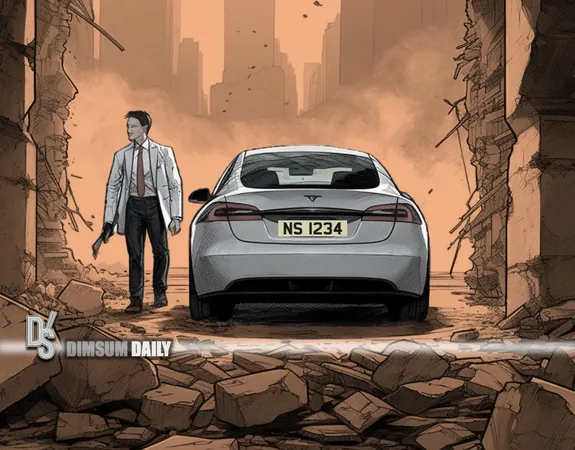
April 20, 2025 – Yesterday, an abandoned Tesla on Hong Kong's Tolo Highway served as a powerful metaphor for the city’s crippling work culture. With its airbags deployed and windshield shattered, the vehicle was a stark reminder of the high price many pay for their jobs. Instead of addressing this wreck, the owner vanished into the morning rush, prioritizing a meeting over personal safety. This is not just a poor decision; it embodies a city addicted to work, a culture that has turned obsession into a dangerous norm.
A Culture of Overwork and Sacrifice
In Hong Kong, dedication to work has transformed into a pathological relationship where individuals willingly compromise their health and personal lives for the illusion of success. In the towering banks of Central, employees vie to pull the most all-nighters, treating sleep deprivation as a badge of honor. Meanwhile, in bustling Wan Chai, traders down energy drinks while their relationships crumble over ignored messages. Retail staff endure grueling triple shifts, their exhaustion overlooked as they struggle to pay for tiny subdivided apartments. Real estate agents burn the midnight oil, sacrificing personal time to meet demanding clients, all in a relentless quest for status.
Erosion of Personal Boundaries
The issue extends far beyond long hours; it signifies a complete breakdown of the boundary between work and home life. Average workers check emails within 15 minutes of waking and respond to messages well into the night. Weekends offer little reprieve, morphing into stress-filled transitions with Sunday night anxiety creeping in by Saturday afternoon. Vacations often go unused, viewed as an admission of weakness in a society that equates busyness with value.
The Mental Toll on Society
The psychological fallout from this relentless work culture is alarming. Clinics throughout Hong Kong report soaring instances of stress-related ailments—from hair loss to digestive disorders—directly tied to workplace tensions. Psychiatrists observe rising cases of 'high-functioning depression,' where individuals appear productive yet harbor deep emotional struggles. Tragically, many children are left in the care of domestic helpers while parents labor late into the night, leading to familial tensions that may take years to mend.
A System that Protects Overwork
Hong Kong's workaholism is perpetuated by a system that rewards those who sacrifice personal lives for corporate gain. Bonuses in banks and law firms favor those who give up their time, while corporate cultures often penalize employees who prioritize family or health. Even governmental policies favor business interests over worker protection, celebrating the 'hardworking spirit' of Hong Kong while neglecting the human costs.
A Wake-up Call for the City
The decision by the Tesla owner to abandon his vehicle reflects a harsh reality: in a city where career defines self-worth, a car crash becomes just a minor inconvenience. The true tragedy lies in Hong Kong's creation of a world where such choices feel necessary. Until the city grapples with its overwork addiction, we will continue to witness these symbolic wreckages—both on the roads and in our lives.
A Call for Systemic Change
Real solutions cannot stem from individuals alone; meditation apps and productivity seminars won’t tackle the core issues. Genuine change demands dismantling the structures that conspire to make overwork the norm: reforming labor laws to prioritize worker well-being, reshaping corporate cultures to value quality over quantity, and, crucially, challenging the deeply ingrained identity of Hong Kong as a city that never stops working. We are not just exhausting ourselves; we are doing so with a misguided sense of pride, confusing our suffering for success under the guise of 'world-class efficiency.'

 Brasil (PT)
 Canada (EN)
 Chile (ES)
 Česko (CS)
 대한민국 (KO)
 España (ES)
 France (FR)
 Hong Kong (EN)
 Italia (IT)
 日本 (JA)
 Magyarország (HU)
 Norge (NO)
 Polska (PL)
 Schweiz (DE)
 Singapore (EN)
 Sverige (SV)
 Suomi (FI)
 Türkiye (TR)
 الإمارات العربية المتحدة (AR)