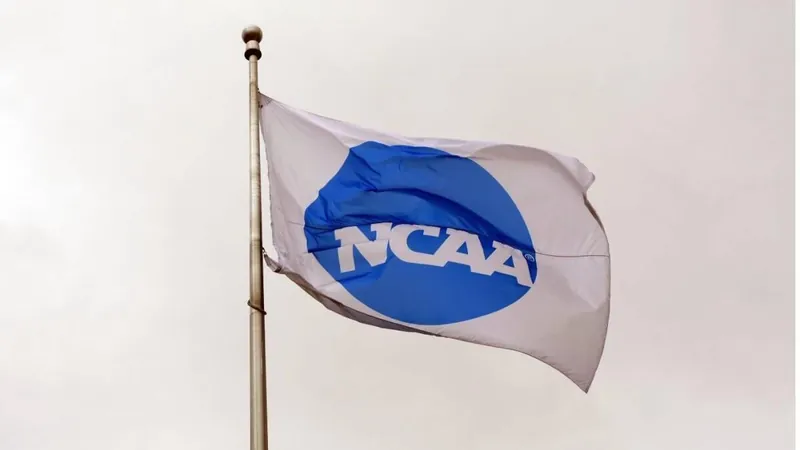
Judge Sets Hard Deadline in Landmark House v. NCAA Case: Will Settlement Survive?
2025-04-24
Author: Wai
Groundbreaking Deadline Set by Judge Wilken
In a dramatic turn of events, Judge Claudia Wilken of the U.S. District Court for Northern California has delivered a crucial ultimatum in the House v. NCAA case. On Wednesday, she granted the defendants just 14 days to finalize an agreement regarding roster limits in college sports, warning that failure to do so could lead to the rejection of this landmark settlement.
Grandfathering Athletes: A Key Concern
Judge Wilken is pushing for a "grandfathering" provision that would allow current athletes to remain on their respective teams until their eligibility concludes. This move aims to prevent a mass exodus of nearly 5,000 athletes who could find themselves cut if new roster restrictions are enforced, which promises unlimited scholarships but mandates reduced team sizes.
NCAA Response to Judge's Order
Following Wilken's directive, the NCAA and its five powerhouse conferences released a statement indicating they are reviewing the judge's order closely. Their focus remains on securing approval for a settlement that could revolutionize opportunities for student-athletes while promoting much-needed fairness in college athletics.
The $2.8 Billion Settlement Explained
Central to this case is a staggering $2.8 billion settlement that would enable schools to pay athletes significant amounts of money starting July 1. Football rosters are expected to shrink to 105 players, leading to potential cuts exceeding 20 players at many institutions.
A Brief History of the House v. NCAA Case
Filed in 2020 by prominent athletes like Arizona State swimmer Grant House and basketball star Sedona Prince, this class-action lawsuit seeks to dismantle restrictions on revenue sharing from media rights. Legal heavyweights Steve Berman and Jeffrey Kessler champion the plaintiffs' cause.
What’s on the Horizon?
Should the settlement receive approval, it would wrap up several antitrust lawsuits, including Carter v. NCAA and Hubbard v. NCAA. This initiative could reshape how schools distribute their revenues among athletes, with a proposed breakdown that sees 75% of future earnings directed to football players.
Potential Legal Turmoil Ahead
Despite the settlement's promise, legal concerns surrounding Title IX and antitrust issues are likely to linger. As revenue-sharing models vary between schools, individual athletes may pursue litigation if they perceive inequities in their payouts.
NCAA's Legislative Fallback
In light of ongoing challenges, the NCAA is ramping up its lobbying efforts in Congress, seeking legislative protections against antitrust litigation. A critical hearing is set for Tuesday, where conference commissioners and coaches will advocate for a bill that could shield the NCAA from further legal battles.
Preparing for New Enforcement
The power conferences are gearing up to establish a new oversight body tasked with enforcing the settlement's terms. This organization will oversee NIL deals and monitor revenue-sharing practices to ensure compliance across the board.
Who Foots the Bill?
The NCAA is set to shoulder 40% of the hefty $2.8 billion settlement, while the remaining costs will come from revenue reductions over the next decade. Power conferences, including the ACC and SEC, will also contribute significantly to the financial obligations tied to this groundbreaking agreement.
The Future of College Sports Hangs in the Balance
As the clock ticks down on Judge Wilken's deadline, the future of college athletics hangs precariously in the balance. Will a resolution come together to protect both athletes and the integrity of the NCAA? Only time will tell.

 Brasil (PT)
 Canada (EN)
 Chile (ES)
 Česko (CS)
 대한민국 (KO)
 España (ES)
 France (FR)
 Hong Kong (EN)
 Italia (IT)
 日本 (JA)
 Magyarország (HU)
 Norge (NO)
 Polska (PL)
 Schweiz (DE)
 Singapore (EN)
 Sverige (SV)
 Suomi (FI)
 Türkiye (TR)
 الإمارات العربية المتحدة (AR)