The Silent Crisis: How Sleep Deprivation is Gripping Ukraine Amidst War
2025-04-25
Author: Lok
A Nation on Edge: The Impact of War on Sleep Patterns
As the war in Ukraine continues to wreak havoc, the psychological toll is becoming increasingly evident. For 22-year-old Sofia Tsarenko from Dnipro, the early days of the conflict were spent drinking wine to unwind. But as the situation escalated, her anxiety grew and alcohol ceased to provide relief. Only through sleeping pills and antidepressants could she find solace, stating, "I felt like angels were taking me to sleep."
The Hidden Toll of Conflict: A Sleep Deprivation Epidemic
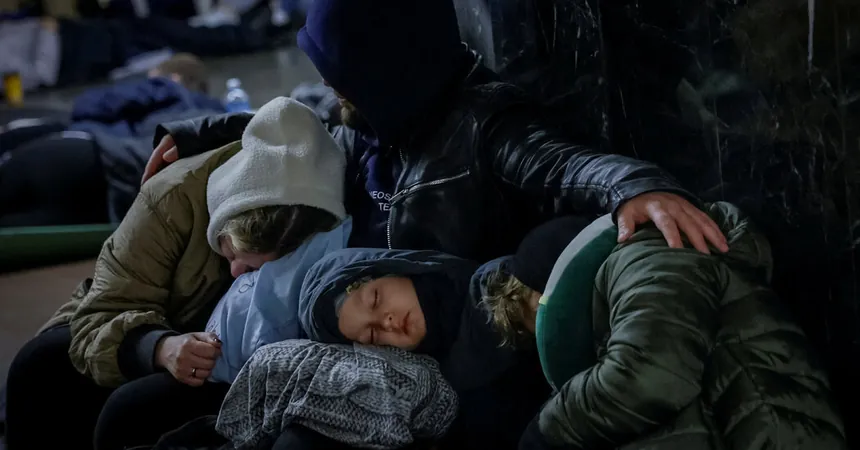
With Russia’s aggressive invasion leading to thousands of casualties, the mental health repercussions are severe. Experts note that nearly three years of warfare have triggered a national health crisis, primarily driven by rampant sleep deprivation. Ukrainians now find themselves lying awake each night, listening for the ominous buzz of Russian drones and the inevitable explosions that follow.
According to Ukrainian officials, the intensity of drone strikes has surged, especially around key peace negotiations, adding a layer of anxiety that amplifies sleeplessness. Major urban areas like Kyiv have not been spared, as evidenced by a deadly attack last Thursday.
Understanding the Effects: The Weight of Chronic Sleep Deprivation
Experts warn that the psychological effects of sleep deprivation—often referred to as 'sleep debt'—can lead to severe mental health issues, including anxiety, irritability, and depression. The World Health Organization highlighted that nearly 50% of Ukrainians are grappling with mental health concerns. Unsurprisingly, sales of antidepressants surged by 46% last year, marking a desperate response to the crisis.
A Doctor’s Insight: The Struggles of a Grieving Nation
Dr. Davyd Shcherbyna, a psychiatrist in Kyiv, reveals a startling insight: half of his patients report sleep disorders. He emphasizes how stress diminishes the ability to sleep, noting that many mothers refuse medication, fearing they'll miss air-raid alarms while medicated.
Diverse Coping Mechanisms: From Weighted Blankets to Hallway Sleeping
The coping strategies employed by Ukrainians vary widely. In Vasylkiv, Tetyana Horobchenko shares that during drone attacks, she and her family huddle in their bathroom. Once it’s over, she often finds herself endlessly scrolling through news updates instead of sleeping.
In places like Lviv, where air-raid sirens are rare, anxiety about the future keeps Volodymyr Behlov awake at night, driving him to seek antidepressants. Others have turned to creative coping methods, like sleeping in hallways or using weighted blankets to feel more secure.
The Human Cost: Sleepless Nights Altering Lives
For many, the lack of sleep is more than just an inconvenience. Maryna Hrudiy, a consultant on psychological health, shares her transformation from sleepless nights filled with fears for her daughter’s safety to finding relief through medication and sharing a bed with her child.
As Ukraine endures the harrowing realities of war, sleep deprivation emerges as a silent crisis demanding urgent attention. The quest for rest is not just about sleep—it's about reclaiming vitality in a country under siege.

 Brasil (PT)
 Canada (EN)
 Chile (ES)
 Česko (CS)
 대한민국 (KO)
 España (ES)
 France (FR)
 Hong Kong (EN)
 Italia (IT)
 日本 (JA)
 Magyarország (HU)
 Norge (NO)
 Polska (PL)
 Schweiz (DE)
 Singapore (EN)
 Sverige (SV)
 Suomi (FI)
 Türkiye (TR)
 الإمارات العربية المتحدة (AR)