Unveiling the Secrets of Growing Up as an Only Child: A New Study Revolutionizes Our Understanding
2025-04-21
Author: Ying
In a world where families are getting smaller, the phenomenon of single-child households is on the rise—prompting researchers to delve deeper into the psychological and neurological effects of growing up without siblings. While previous studies have thrown light on both the positive and negative sides of being an only child, the full impact on adult brain development and behavior has remained largely a mystery.
A groundbreaking study from Tianjin Medical University General Hospital and other Chinese institutions sought to fill this knowledge gap. Published in the journal *Nature Human Behaviour*, their research identifies specific patterns in brain activity and behavioral tendencies among adults who grew up as only children.
"As only-child families increase globally, it's essential to explore how this upbringing influences adult brain function and behavior," said lead researchers Jie Tang and Jing Zhang. Their study involved matching 2,397 participants—some raised as only children and others with siblings—based on similar demographic backgrounds.
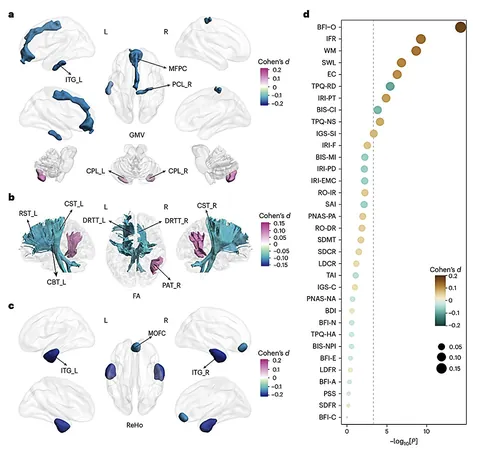
By examining the data from the Chinese Imaging Genetics (CHIMGEN) study, researchers gained invaluable insights into how lacking siblings shapes adult lives. They found notable differences in white matter integrity, brain volume, neuronal activity, and even mental health indicators between the two groups.
Surprisingly, the researchers reported that being an only child correlated positively with language skills and cognitive functioning, challenging stereotypes that associate only children with negative behaviors. "Contrary to popular belief, we discovered that only children exhibited better neurocognitive abilities and mental health compared to their peers with siblings," Tang and Zhang noted.
The study also highlighted the importance of environmental factors such as socioeconomic status, maternal support, and family dynamics. This suggests that targeted interventions could enhance the development of only children by providing diverse experiences that foster cognitive growth and emotional well-being.
In conclusion, while the absence of siblings can have some direct effects on brain and behavior, the environment plays a crucial role. With the right support and opportunities, only children can thrive, proving that upbringing is not just about having siblings but also about the richer experience of family life.


 Brasil (PT)
 Canada (EN)
 Chile (ES)
 Česko (CS)
 대한민국 (KO)
 España (ES)
 France (FR)
 Hong Kong (EN)
 Italia (IT)
 日本 (JA)
 Magyarország (HU)
 Norge (NO)
 Polska (PL)
 Schweiz (DE)
 Singapore (EN)
 Sverige (SV)
 Suomi (FI)
 Türkiye (TR)
 الإمارات العربية المتحدة (AR)