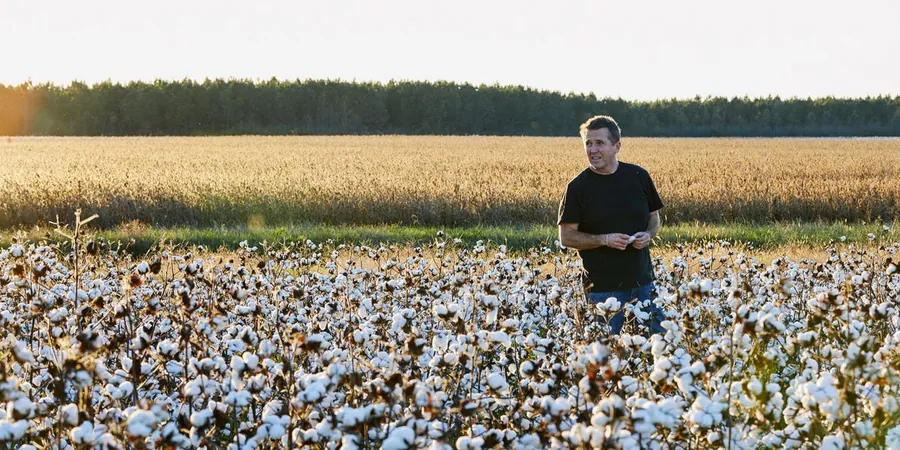
Why One CEO Believes American-Made Sweatshirts Could Save the Economy
2025-04-21
Author: Kai
The Birth of American Giant
In a bold move against the tide of overseas manufacturing, Bayard Winthrop founded American Giant, an apparel company aimed at reviving American-made clothing. Winthrop’s journey began just after the birth of his daughter in 2010, driven by a desire to reconnect with the roots of American craftsmanship.
A Disconnection from Quality
Having previously adhered to a libertarian economic philosophy that prioritized cost savings, Winthrop realized that outsourcing had severed his connection to the very products he sold. This disconnection fueled his motivation to create a brand that stood for quality and American values.
The 'Greatest Hoodie Ever' Phenomenon
Launching with a single sweatshirt, American Giant quickly gained fame when an article dubbed it 'The Greatest Hoodie Ever Made.' The resulting demand sent the company into a three-year back-order frenzy, proving that consumers longed for quality domestic products.
The Plight of the Working Class
Winthrop reflects on the stark reality facing the American working class over the past four decades. While areas like San Francisco thrive, many rural and urban communities are struggling, highlighting the growing economic divide. He believes that rebuilding a strong domestic manufacturing base can help bridge this gap.
The State of American Manufacturing
In the 1970s, a staggering 95% of clothing purchased in the U.S. was made domestically. Today's figure is below 5%, leading to a fragmented supply chain that complicates production. Unlike in China, where mass production is streamlined, American companies like American Giant must navigate a much more complex landscape.
Resetting Trade Relationships
According to Winthrop, U.S. trade agreements need a fundamental overhaul. He views the current administration's focus on curbing dependence on China as a necessary step, despite concerns about instability in negotiations. He argues for fairer treatment of U.S. allies in this trade reset.
A New Vision for Manufacturing
Winthrop is optimistic that quality knitwear can be produced in the U.S. at scale, despite challenges related to workforce readiness and technology imports. He believes there is considerable potential within the U.S. to revitalize the textile industry and provide sustainable jobs.
Embracing Conscious Consumerism
Winthrop acknowledges that rebuilding American manufacturing may mean higher prices for consumers but argues that this trade-off could promote local employment and better quality products. He urges Americans to consider how their purchasing choices impact their communities.
A Call to Action
In conclusion, Winthrop advocates for a collective effort to reintegrate American manufacturing into the economic fabric of the nation. By emphasizing quality over cost, he believes the U.S. can create a more equitable economy that benefits all Americans.


 Brasil (PT)
 Canada (EN)
 Chile (ES)
 Česko (CS)
 대한민국 (KO)
 España (ES)
 France (FR)
 Hong Kong (EN)
 Italia (IT)
 日本 (JA)
 Magyarország (HU)
 Norge (NO)
 Polska (PL)
 Schweiz (DE)
 Singapore (EN)
 Sverige (SV)
 Suomi (FI)
 Türkiye (TR)
 الإمارات العربية المتحدة (AR)