6 Creatures Facing Habitat Loss Due to Climate Change
2025-04-23
Author: John Tan
The Polar Bear: A Symbol of Warming Seas
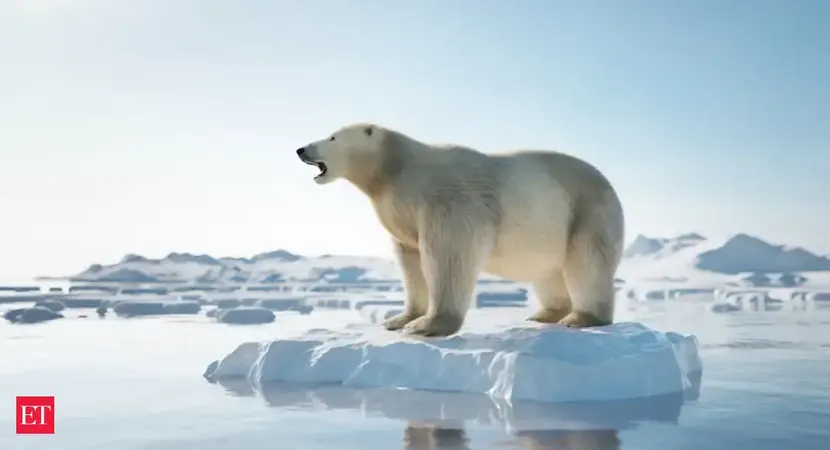
Few creatures embody the impact of climate change as strikingly as the polar bear. These magnificent predators rely heavily on the Arctic sea ice to hunt seals, rest, and breed. However, with Arctic temperatures soaring nearly four times faster than the global average, the sea ice is vanishing earlier in spring and reforming later in fall. This drastic change is drastically limiting the bears' access to food, threatening their very survival.
Coral Reefs: The Oceans' Colorful Life Support
Coral reefs are not just beautiful; they are vital ecosystems teeming with marine life. However, climate change poses a dire threat to these underwater wonders. Corals are extremely sensitive to temperature shifts; even a minor increase of just 1°C can lead to "coral bleaching." When corals expel the necessary symbiotic algae that provide them with nutrients and vibrant colors, they risk starvation and death.
Snow Leopards: Climbers in Trouble
In the rugged mountains of Central Asia, snow leopards navigate alpine meadows and rocky terrains with grace. These elusive big cats are perfectly tailored to thrive in cold environments. Yet, rising temperatures drive their habitats to higher ground, fragmenting their living spaces and increasing competition with other predators such as wolves and feral dogs.
Leatherback Sea Turtles: Navigators at Risk
The leatherback sea turtle, the largest of its kind, can journey across vast oceans, but its survival hinges on delicate temperature balances both in the ocean and on land. These turtles prefer sandy beaches for egg-laying, and the temperature of the sand determines the gender of their hatchlings. Warmer sands yield more females, while extreme heat threatens to obliterate embryos entirely.
The Golden Toad: A Victim of Climate Change
Once a gleaming symbol of biodiversity in Costa Rica's Monteverde Cloud Forest, the golden toad has become a tragic example of species loss attributed to climate change. This tiny amphibian thrived in a specific cool, misty forest region. However, an unprecedented period of heat and drought in the late 1980s—associated with global climate changes—dried up its breeding pools, leading to its presumed extinction.
The Saiga Antelope: Unique and Vulnerable
Hailing from the Central Asian steppes, the saiga antelope is easily identifiable thanks to its distinctive bulbous nose, which helps filter dust and warm icy air. These nomadic grazers are particularly vulnerable to environmental fluctuations. Recent climate change has intensified their challenges, presenting hotter summers, harsher winters, and unpredictable weather patterns that threaten their existence.
 Brasil (PT)
 Canada (EN)
 Chile (ES)
 Česko (CS)
 대한민국 (KO)
 España (ES)
 France (FR)
 Hong Kong (EN)
 Italia (IT)
 日本 (JA)
 Magyarország (HU)
 Norge (NO)
 Polska (PL)
 Schweiz (DE)
 Singapore (EN)
 Sverige (SV)
 Suomi (FI)
 Türkiye (TR)
 الإمارات العربية المتحدة (AR)