8 Mind-Blowing Facts About Animal Poo That Will Leave You Speechless
2025-04-20
Author: Yu
Let’s face it, poop is a topic that intrigues us all! But while human excrement may be pretty standard, the world of animal dung is anything but ordinary.
From the bizarre habits of sloths to the surprising environmental roles of sperm whale waste, animal droppings are filled with peculiar truths that can shock and amaze. Buckle up as we delve into some jaw-dropping facts about animal poo!
1. Sperm Whale Poop: The Carbon-Offsetting Wonder
Did you know that sperm whale poop contributes to carbon neutrality? This marine giant’s excrement stimulates the growth of phytoplankton, which captures significant amounts of carbon dioxide, effectively balancing out their own emissions when they breathe.
2. The Mystery of Bird Droppings: It's All in the Pee!
Ever wondered why bird poo is white? Unlike mammals, birds don’t have separate exits for urine and feces; everything comes out of their cloaca. The white part of their droppings comes from uric acid crystals in their urine. Talk about multitasking!
3. Sloths: Once-A-Week Poopers!
Sloths have a peculiar habit— they venture to the ground to poop, which they only do every 5 to 7 days! Why they risk exposure to predators is still a mystery, but some believe it's linked to fertilizing their favorite trees.
4. Refecting Rabbits: The Truth About Lagomorphs
Rabbits and hares are unique in their eating habits—they consume their own feces! This process, known as refection, allows them to extract additional nutrients from their food. A natural recycling system!
5. Twisted Pine Marten Poop: A Unique Design
Pine marten droppings are easy to identify thanks to their twisted, coiled shape. This fascinating feature results from the animal wiggling its hips while pooping, and in summer, their droppings may even take on a bluish hue from their berry diet.
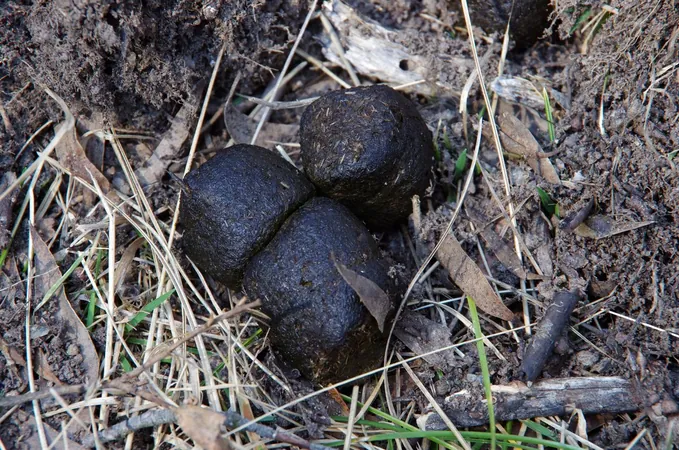
6. Wombats: The Cube-Shaped Poo Artists
Wombats have created quite a name for themselves with their cube-shaped poop! Each night, these quirky marsupials can produce up to 100 pieces of this remarkable shape, a phenomenon that has scientists scratching their heads.
7. Koala Joeys: Eating Mom's Poo
To survive on a diet of eucalyptus leaves, baby koalas (joeys) must consume a special liquefied form of their mother’s feces, known as ‘pap.’ This process helps them acquire the necessary gut bacteria for digestion!
8. Seed-Dropping Orangutans: Heroes of Biodiversity
Orangutan poop plays a crucial ecological role by dispersing seeds throughout their habitats. Their declining populations pose a serious threat to biodiversity, making their role as seed dispensers even more vital.
9. Fossilized Poop: Nature's Ancient Artifacts
Believe it or not, fossilized poop exists! An Arizona museum boasts around 8,000 pieces of ancient droppings, including a massive specimen thought to belong to a Tyrannosaurus Rex. Talk about poopy history!
These astonishing facts reveal just how surprising and vital animal dung can be. Who knew that something so unglamorous could play such a significant role in nature? The next time you encounter animal feces, remember these wild truths!

 Brasil (PT)
 Canada (EN)
 Chile (ES)
 Česko (CS)
 대한민국 (KO)
 España (ES)
 France (FR)
 Hong Kong (EN)
 Italia (IT)
 日本 (JA)
 Magyarország (HU)
 Norge (NO)
 Polska (PL)
 Schweiz (DE)
 Singapore (EN)
 Sverige (SV)
 Suomi (FI)
 Türkiye (TR)
 الإمارات العربية المتحدة (AR)