A Revolutionary Vaccine: The Key to Combating the Mosquito-Borne Rift Valley Fever
2025-04-25
Author: Sarah
The Looming Threat of Rift Valley Fever
Pastoral farmers in sub-Saharan Africa live in constant fear of Rift Valley fever (RVF), a devastating mosquito-borne viral disease. This isn't just about the health risks to people; it's about the catastrophic impact on livestock, which can lead to hunger and malnutrition for entire families.
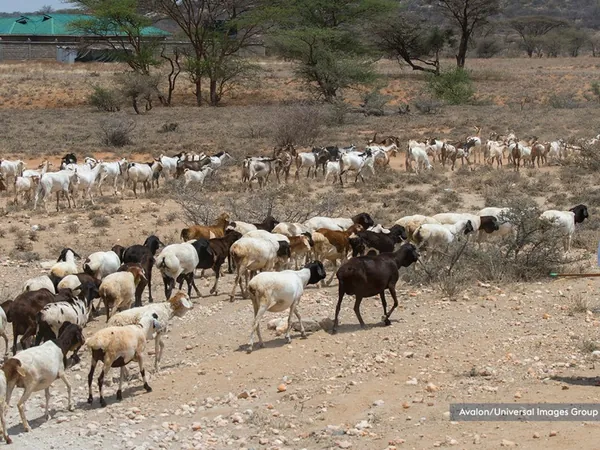
RVF wreaks havoc on herds of goats, cattle, and sheep, often resulting in mass abortions. Losing these animals means losing income, food, and future opportunities for children and grandchildren, putting the livelihoods of many pastoral communities on the line.
A Personal Mission
For Professor George Warimwe, a Kenyan scientist dedicated to studying RVF for over a decade, developing a vaccine to protect both humans and animals is not just a professional goal—it's a personal mission. Having grown up in the slums of Nairobi, he understands firsthand the vital role livestock plays in supporting families.
His journey was made possible by his grandparents’ sacrifice, selling cattle to fund his education, allowing him to pursue higher studies and return to aid his community.
Groundbreaking Vaccine Trials
Now, as a principal investigator in a groundbreaking Phase II clinical study set to launch in May 2025, Professor Warimwe aims to test a pioneering vaccine known as ChAdOx1 RVF. This vaccine holds the promise of becoming the world’s first licensed human vaccine against this deadly fever—expanding its reach from East Africa to potentially global applications.
“It's thrilling to bring a solution to Kenya, where I grew up. I believe in using my skills to tackle real-world problems,” expresses Professor Warimwe.
A Dual-Use Vaccine for a One Health Approach
This innovative vaccine isn't just designed for humans; it has shown protection across various livestock species. If successful, it could mark a significant advancement in safeguarding both human health and animal populations—a true implementation of the One Health approach to virus prevention.
Peter Hart, CEPI’s Rift Valley fever Program Lead, emphasizes the significance of this initiative. “This is the most advanced stage ever for a human RVF vaccine trial in an outbreak-prone region,” he notes.
History of Outbreaks and the Changing Landscape
Since the first identification of the RVF virus nearly a century ago in Kenya, there have been devastating outbreaks, including the catastrophic epidemic of 1997-1998 that infected tens of thousands and left more than 400 dead. The disease has since spread beyond Africa, reaching places like Saudi Arabia and Yemen.
Recent outbreaks in the Indian Ocean islands evoke memories of the Zika virus's explosive global spread, raising concerns about RVF’s potential to wreak similar havoc.
Preparing for Future Threats
Though there haven't been recent outbreaks in Europe or the Americas, experts warn it's only a matter of time due to the virus's adaptability to different mosquito species, which can transmit it from animals to humans.
Research published in the BMJ highlights that climate change is altering the epidemiology of RVF, widening its geographic range and increasing the likelihood of future epidemics.
An Urgent Call to Action
Professor Sarah Cleaveland from the University of Glasgow emphasizes the critical need for an effective RVF vaccine. Developing one could serve not only as a vital tool in endemic regions but also fortify global health security. “We know the risks. We know the mosquito vectors are spreading. An RVF vaccine is crucial to reducing that risk,” she states firmly.
As the world prepares for potential new challenges posed by RVF, this innovative vaccine may be the key to protecting both lives and livelihoods across the globe.

 Brasil (PT)
 Canada (EN)
 Chile (ES)
 Česko (CS)
 대한민국 (KO)
 España (ES)
 France (FR)
 Hong Kong (EN)
 Italia (IT)
 日本 (JA)
 Magyarország (HU)
 Norge (NO)
 Polska (PL)
 Schweiz (DE)
 Singapore (EN)
 Sverige (SV)
 Suomi (FI)
 Türkiye (TR)
 الإمارات العربية المتحدة (AR)