A Swiss-Sized Hole in Antarctic Sea Ice: The Shocking Discovery Explained!
2025-04-21
Author: Arjun
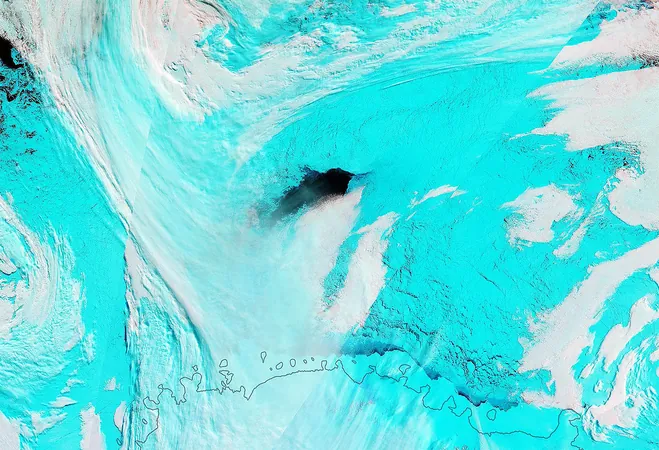
Antarctica’s icy expanse is known for its massive sea ice cover, but recently, something extraordinary was unveiled. NASA scientists were left astounded when they detected a vast, dark patch for the first time—a massive hole in the ice that soon swelled to the size of Switzerland!
This unusual phenomenon, called a polynya, persisted for several weeks, prompting researchers to delve deep into understanding its formation, particularly how it emerged so far from shore, right above the submerged Maud Rise.
What is a Polynya?
Typically, the Southern Ocean is layered like a cake: a thin, cold, fresh top layer floats over warmer, saltier water beneath. However, conditions must be just right to create a mid-ocean polynya, requiring a collapse of this layering.
In simpler terms, as salt moves to the surface, it makes the top layer denser, allowing turbulence to occur. This causes the ice cover to fracture, enabling heat to rise and gases to escape.
The Mystery of Maud Rise
Historical patterns hint that Maud Rise plays a vital role in this situation. Between 1974 and 1976, a larger polynya lingered over the same area every winter, marking it as a recurring phenomenon. However, since the 1970s, such occurrences have dwindled.
The lead researcher, Aditya Narayanan from the University of Southampton, emphasized that the 2017 polynya was the first significant hole observed in the Weddell Sea for decades.
The Ingredients Behind the Polynya
What caused this extraordinary phenomenon? The Weddell Gyre, a powerful ocean current, sped up, drawing warmer, salty water closer to the surface, which softened the ice. This process should normally halt any mixing by freshening the surface water.
However, storms played an unusual role by pushing sea ice away and bringing saltwater right to Maud Rise, while atmospheric rivers added necessary warmth to disrupt stable water layers.
The Role of Ekman Transport
Adding to this complexity, a physical principle known as Ekman transport pushed salty water precisely where the 2017 polynya opened. This transport is crucial for maintaining the ocean's balance of salt and temperature, facilitating ongoing mixing.
By late September, this polynya had vented over twenty times the heat usually released through undisturbed ice!
Global Impacts of Polynyas
While it may seem like a local anomaly, the effects of this polynya ripple across the globe. These phenomena can impact ocean currents and heat distribution, influencing ecosystems and climate far beyond Antarctica’s shores.
According to Professor Sarah Gille from UCSD, the effects of such polynyas can linger for years, altering how water circulates globally. The dense waters created can contribute to processes that release carbon dioxide into the atmosphere.
What's Next?
Looking forward, there are concerns about whether these polynyas will become more frequent due to ongoing climate changes. With Antarctic sea ice declining since 2016, the interplay of warmer, salty water continues to pose risks for the region.
As scientists prepare to monitor the coming winters closely, the existence of this polynya serves as a stark reminder—the Antarctic ice, often seen as a stable world, is full of surprises, and the impacts of its changes are felt worldwide.


 Brasil (PT)
 Canada (EN)
 Chile (ES)
 Česko (CS)
 대한민국 (KO)
 España (ES)
 France (FR)
 Hong Kong (EN)
 Italia (IT)
 日本 (JA)
 Magyarország (HU)
 Norge (NO)
 Polska (PL)
 Schweiz (DE)
 Singapore (EN)
 Sverige (SV)
 Suomi (FI)
 Türkiye (TR)
 الإمارات العربية المتحدة (AR)