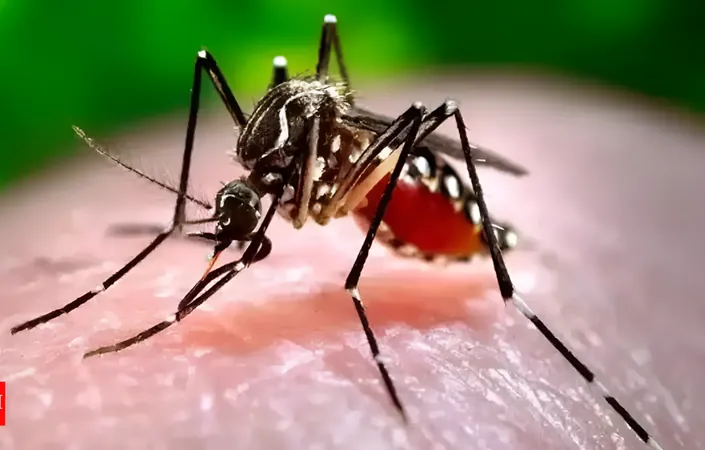
Alarming Funding Cuts Fuel Malaria Resurgence in Africa
2025-04-26
Author: Sarah
A Storm Brews Over Malaria in Africa
As rainy season clouds loom over western Kenya, families typically brace themselves to protect their homes from swarming malaria-carrying mosquitoes. But this year, residents of Busia and Migori counties are facing a dire reality: their lifesaving Indoor Residual Spraying (IRS) campaign has been canceled.
This devastating cut follows the U.S. withdrawal of critical funding that supported Amref Health Africa, the charity responsible for implementing the spraying initiative. The cancellation represents more than just a temporary setback; it’s a stark reminder of the broader consequences stemming from U.S. aid cuts.
Tidal Wave of Disruption
The cancellation of the IRS program highlights a worrying trend as the Trump administration's sweeping foreign aid freeze has disrupted essential malaria programs across Africa. With areas like Busia and Migori experiencing some of the highest malaria rates in the country, the impact is particularly acute.
George Githuka from Amref Health Africa lamented, "We couldn't proceed with a high-impact intervention like the IRS, and this has severely disrupted other malaria initiatives." Indeed, from Kenya to Mozambique, vital malaria programs are struggling to stay afloat amid funding shortages.
Historical Context: Repeating Past Mistakes
Experts warn that these funding cuts could unravel years of progress in malaria prevention, leading to a resurgence of the disease not only in Africa but around the globe. Daniel Ngamije from the World Health Organization cautioned, "History shows us the catastrophic consequences of neglecting malaria control." He referred to the 1969 global eradication effort that was abandoned, resulting in a multiple-decade resurgence of cases and deaths.
The Real Cost of Malaria
Malaria is a preventable and curable disease that claims nearly 600,000 lives yearly, with 95% of those deaths occurring in Africa, predominantly among children under five. Four countries—Nigeria, Democratic Republic of Congo, Niger, and Tanzania—account for a staggering half of all global malaria deaths.
While the WHO has declared 44 countries malaria-free since 1955, transmission still occurs in 83 countries, with an alarming rise in cases—263 million new cases reported in 2023 up from 252 million the year prior.
Falling Short in the Fight Against Malaria
As over 40% of insecticide-treated net campaigns and nearly 30% of malaria prevention programs face delays or funding shortages, disease control experts fear a perfect storm is on the horizon. Factors such as climate change, conflict, and drug resistance exacerbate the precarious situation.
Scott Filler of The Global Fund stated, "Without focused efforts against malaria, we risk seeing a resurgence of this deadly disease. The resources to fight it are dwindling while challenges mount." His warning underscores the urgency of re-committing to malaria control efforts now more than ever.
Call to Action: A Collective Responsibility
As the situation grows increasingly dire, the call for renewed funding and international collaboration is critical. Experts agree that reversing U.S. aid cuts and restoring support for global health initiatives is not just beneficial—it's essential for the survival of millions.
The question remains: will the world respond before it's too late?

 Brasil (PT)
 Canada (EN)
 Chile (ES)
 Česko (CS)
 대한민국 (KO)
 España (ES)
 France (FR)
 Hong Kong (EN)
 Italia (IT)
 日本 (JA)
 Magyarország (HU)
 Norge (NO)
 Polska (PL)
 Schweiz (DE)
 Singapore (EN)
 Sverige (SV)
 Suomi (FI)
 Türkiye (TR)
 الإمارات العربية المتحدة (AR)