Ancient Saber-Toothed Predator Fossil Found: A Game-Changer for Mammal Evolution
2025-04-18
Author: Mei
Fossil Discovery in Mallorca Shakes Up Evolutionary Timeline
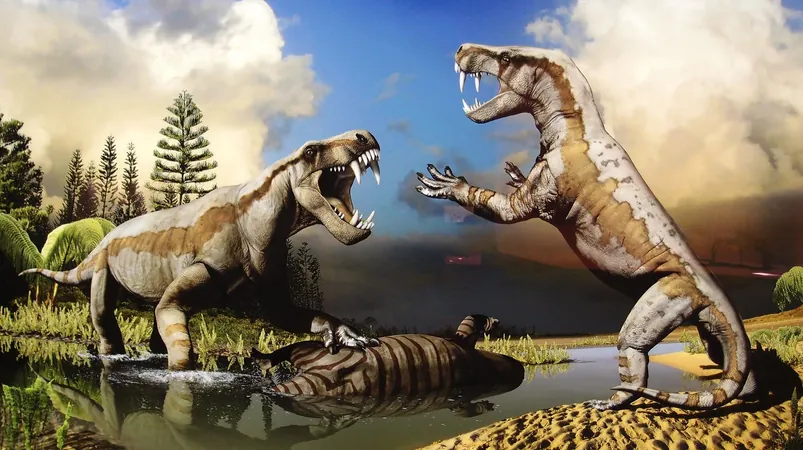
A groundbreaking fossil find on the Mediterranean island of Mallorca is rewriting the history books on mammal evolution. Unearthed remains of a gorgonopsian—an ancient saber-toothed predator—date back an astonishing 270 to 280 million years, making it the oldest of its type ever discovered.
What is a Gorgonopsian?
Often resembling a medium-sized dog, but with a fierce, entirely distinct appearance, the gorgonopsian featured long, blade-like canine teeth that marked it as a top predator in its ecosystem. Imagine a prehistoric creature strutting down the street looking somewhat like a husky—but without fur or dog-like ears!
Filling in the Gaps of Prehistoric History
Before this find, the oldest confirmed therapsid was Raranimus dashankouensis, dated to 265 million years ago. This discovery helps close a significant gap in the fossil record—an elusive 'ghost lineage' that had puzzled scientists for decades. The remains include skull fragments, ribs, vertebrae, and a femur, all from rocks once part of Pangaea.
A Surprise Excavation
“I never anticipated we would uncover so many remains of this kind in Mallorca,” admits lead author Rafel Matamales. This exceptional find reveals vital details about therapsid evolution, suggesting rapid diversification after the lesser-known Olson's Extinction, which preceded the more catastrophic Permian-Triassic extinction.
The Importance of Therapsids in Evolution
Therapsids were pivotal in the story of life on Earth, being the predecessors of mammals. Their anatomical features, including special skull holes and evolved jaw structures, uniquely positioned them on the evolutionary bridge between reptiles and modern mammals. While not direct ancestors of mammals, gorgonopsians are closely related to the lineage that eventually led to them.
Global Impact: Clarifying the Evolutionary Pathways
This discovery sheds light on how therapsids diversified around the globe, particularly in pale tropical regions, contrasting with prior findings mostly from Russia and southern Africa. The fossil's geographic context is crucial, linking early Permian ecosystems, and suggesting the importance of these areas in therapsid evolution.
Why This Matters
This gorgonopsian fossil not only fills in vital gaps in our understanding of prehistoric life but also enhances our knowledge of how distinct ecosystems contributed to mammalian origins. With further research and advanced statistical modeling, scientists are poised to unravel even more secrets of our ancient ancestors.
So, hang tight; as paleontologists dig deeper, our grasp of evolutionary history continues to evolve right alongside it!

 Brasil (PT)
 Canada (EN)
 Chile (ES)
 Česko (CS)
 대한민국 (KO)
 España (ES)
 France (FR)
 Hong Kong (EN)
 Italia (IT)
 日本 (JA)
 Magyarország (HU)
 Norge (NO)
 Polska (PL)
 Schweiz (DE)
 Singapore (EN)
 Sverige (SV)
 Suomi (FI)
 Türkiye (TR)
 الإمارات العربية المتحدة (AR)