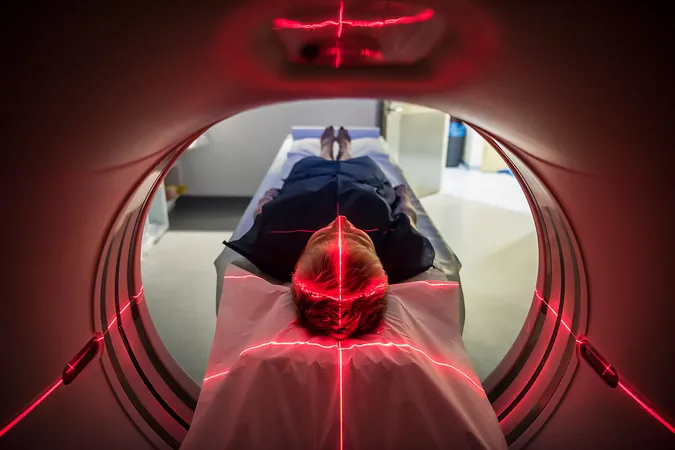
Are CT Scans Secretly Fueling a Cancer Epidemic? A New Study Raises Alarms
2025-04-22
Author: Wei Ling
The Pros and Cons of CT Scans
CT scans have revolutionized modern medicine, providing rapid and detailed insights into conditions ranging from cancer to strokes. However, a recent study shines a light on a potentially alarming consequence of our increasing dependence on this technology.
The Shocking Statistics
Published in Jama Internal Medicine, researchers project that CT scans conducted solely in the U.S. in 2023 could lead to over 100,000 additional cancer cases. If current scanning trends continue, CTs might be responsible for about five percent of all new cancer diagnoses annually.
This figure is particularly concerning as the frequency of CT scans has surged by 30% over the past decade, with approximately 93 million scans performed on 62 million individuals in 2023 alone.
Who’s at Risk?
While the risk from any single scan is minimal, it is not entirely absent, especially for younger patients. Children and teenagers, whose bodies are still developing, are especially at risk. Damage caused by ionizing radiation might not appear until many years later.
Although over 90% of CT scans are conducted on adults, they still represent the largest share of potential impacts. The cancers most commonly associated with CT exposure include lung, colon, bladder, and leukemia, with breast cancer being a significant concern for women.
The Rising Concern
What makes these findings stand out is the dramatic increase in projected future cancer cases linked to CT scans. In 2009, a similar study estimated around 29,000 additional cancers; the new projection is more than three times higher—a reflection of both the growing number of scans and advancements in analyzing radiation exposure to specific organs.
CT Scans vs. Lifestyle Risks
Fascinatingly, the researchers suggest that if the status quo persists, CT-related cancers could rival those caused by alcohol consumption or obesity—two well-known health risks.
Understanding the Risks of Different Scans
Not all CT scans carry the same risk profile. In adults, scans of the abdomen and pelvis contribute most to the potential rise in cancer cases, while in children, head CTs pose the greatest danger, particularly for infants under one year.
A Double-Edged Sword
Despite these risks, medical professionals underscore the life-saving importance of CT scans. They are crucial for early diagnosis and management of conditions in emergencies. The challenge lies in ensuring they are used judiciously.
Innovations on the Horizon
Emerging technologies like photon-counting CT scanners promise to reduce radiation exposure. Additionally, MRI scans offer a radiation-free alternative. By employing enhanced diagnostic checklists, healthcare providers can better determine when scans are necessary versus when safer options like MRI or ultrasound could suffice.
What the Study Doesn't Confirm
It's crucial to note that this study does not definitively establish that CT scans cause cancer in individuals; the estimates hinge on risk models rather than direct evidence. The American College of Radiology also emphasizes the lack of studies linking CT scans directly to cancer in humans, even after multiple scans.
The Bottom Line
While the correlation between radiation and cancer is well-established, the sheer volume of scans makes even small risks significant. CT scans undeniably save lives, yet they come with their own set of risks. As medical technology advances, so too must our approach to it. By minimizing unnecessary scans and opting for safer alternatives when possible, we can ensure that these valuable diagnostic tools continue to benefit patients without outweighing their risks.
 Brasil (PT)
 Canada (EN)
 Chile (ES)
 Česko (CS)
 대한민국 (KO)
 España (ES)
 France (FR)
 Hong Kong (EN)
 Italia (IT)
 日本 (JA)
 Magyarország (HU)
 Norge (NO)
 Polska (PL)
 Schweiz (DE)
 Singapore (EN)
 Sverige (SV)
 Suomi (FI)
 Türkiye (TR)
 الإمارات العربية المتحدة (AR)