Are 'Zombie' Skin Cells a Help or Hindrance? Discover the Surprising Truth!
2025-04-25
Author: Sarah
Unveiling the Mystery of Zombie Cells
Senescent skin cells, colloquially known as zombie cells, have long puzzled scientists. These cells remain alive yet lose their effectiveness, often contributing to inflammation and diseases such as cancer. But there's a new twist: not all zombie cells are created equal.
Breakthrough Research at Johns Hopkins
Researchers at Johns Hopkins University have made a groundbreaking discovery, identifying three distinct subtypes of senescent skin cells, each with unique shapes and functions. This revelation could revolutionize how we treat age-related diseases by allowing scientists to target the harmful types while preserving the beneficial ones.
The Science Behind the Study
Published in the journal *Science Advances*, Jude Phillip, an assistant professor of biomedical engineering, highlighted the significance of this research. Previously, senescent skin cells were treated as a homogenous group, but this new classification shows they can follow different pathways into their zombie state.
Using advanced machine learning and imaging technology, researchers analyzed skin cell samples from a wide age range—20 to 90 years old—from participants in the Baltimore Longitudinal Study, the nation's longest ongoing aging study.
Mapping the Zombie Cell Landscape
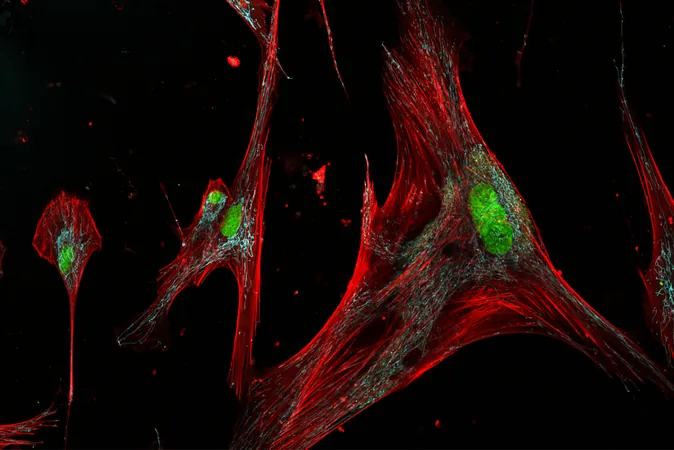
The team extracted fibroblasts, the structural cells of skin, and induced their senescence through DNA damage, a natural process of aging. The researchers then employed special dyes to capture images of the fibroblasts' shapes and stained elements indicative of senescence. An innovative algorithm measured 87 unique characteristics, classifying the fibroblasts into meaningful subgroups.
Among these, three specific shapes stood out, with one subtype, labeled C10, being significantly more common in older individuals.
Targeting the Right Cells
Notably, different subtypes of senescent fibroblasts responded variably to drugs designed to eliminate zombie cells. For instance, the combination therapy Dasatinib + Quercetin proved effective against the C7 variant but struggled with the age-associated C10 cells. This finding emphasizes the potential for developing targeted therapies.
A New Era for Cancer Treatment?
The implications of this research could be game-changing for cancer therapies. Current treatments often induce senescence in cancer cells, turning them into dormant forms, which can lead to a buildup of senescent cells that may provoke inflammation at a time when a patient's immune system is most vulnerable.
The researchers propose that a post-chemotherapy drug could eradicate harmful senescent cells while safeguarding the helpful ones, ushering in a new class of treatments known as senotherapies.
Looking Ahead: A Promising Future
Next steps involve examining these senescence subtypes in actual tissue samples rather than just petri dishes, paving the way for deeper insights into skin and age-related diseases.
Phillip envisions a future where this research aids in predicting effective drugs for targeting senescent cells that contribute to specific ailments—ultimately improving individual diagnoses and health outcomes.
Key Contributors
Additional authors of this transformative study include Pratik Kamat, Nico Macaluso, Yukang Li, and several others, all playing crucial roles in advancing our understanding of these enigmatic cells.
 Brasil (PT)
 Canada (EN)
 Chile (ES)
 Česko (CS)
 대한민국 (KO)
 España (ES)
 France (FR)
 Hong Kong (EN)
 Italia (IT)
 日本 (JA)
 Magyarország (HU)
 Norge (NO)
 Polska (PL)
 Schweiz (DE)
 Singapore (EN)
 Sverige (SV)
 Suomi (FI)
 Türkiye (TR)
 الإمارات العربية المتحدة (AR)