Breakthrough Alzheimer’s Vaccine Heads to Human Trials: A Game-Changer in Neurology!
2025-04-23
Author: Li
The Next Era in Alzheimer’s Treatment?
Researchers from the University of New Mexico Health Sciences are on the verge of a groundbreaking breakthrough—a vaccine aimed at preventing the accumulation of tau protein in the brain, a key player in Alzheimer's disease. With hopes set for human clinical trials, this could be a major turning point in dementia treatment.
Promising Results from Animal Models
In a recent publication in *Alzheimer's & Dementia*, the team, led by Dr. Kiran Bhaskar, revealed that their experimental vaccine provoked a strong immune response in both mice and non-human primates. Bhaskar indicated that these promising results could lead the team to seek funding for a Phase 1 human trial. "The success in non-human primates signifies we're closer than ever to clinical trials," he noted.
Understanding Tau: The Silent Enemy
But what is tau? This naturally occurring protein usually helps stabilize neurons. However, when it undergoes phosphorylation, it becomes misshapen and is expelled from neurons, forming the tangled clumps associated with Alzheimer's and other neurodegenerative disorders. While FDA-approved drugs have tackled amyloid beta levels in the past, their limited effectiveness has sparked interest in targeting tau instead.
How Does the Vaccine Work?
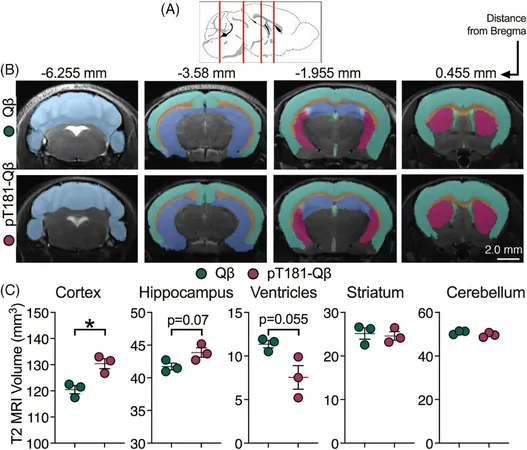
UNM's innovative immunotherapy generates antibodies that specifically bind to the altered tau protein at a site known as pT181, a recognized biomarker for Alzheimer's. Previous research showcased how this vaccine not only produced antibodies but also lessened tau tangling in genetically engineered mice, unveiling a remarkable improvement in cognitive performance.
Collaboration Fuels Success
The latest research builds on these findings, demonstrating robust immune responses in various strains of mice, including those with a human tau gene. The collaborative effort with the University of California, Davis, and the California National Primate Research Center yielded further excitement when macaques showed a strong, lasting immune response after receiving the vaccine.
Real-World Implications
The researchers also discovered that antibodies from the immunized monkeys reacted strongly to samples from individuals with mild cognitive impairment—a common precursor to Alzheimer’s—as well as to brain tissue from Alzheimer's patients. This indicates potential applicability in early-stage human cases.
The Science Behind the Vaccine
Developed using a virus-like particle (VLP) platform, this vaccine utilizes harmless viruses stripped of their harmful DNA, allowing immune cells to easily recognize tau proteins as invaders. VLPs have a proven history of durability and safety in humans, requiring only a primary shot plus two boosters without any additional substances to provoke an immune response.
A Key Player in Development
Dr. Nicole Maphis, a postdoctoral researcher at UNM, emphasized the importance of the collaboration with UC Davis in validating the vaccine's effectiveness. With this ambitious project gaining traction, the potential impact on the fight against Alzheimer's is monumental!
Stay Tuned!
As efforts advance toward clinical trials, the medical community and families affected by Alzheimer’s alike remain hopeful for a brighter future—one where a vaccine could be a vital weapon against this devastating disease.
 Brasil (PT)
 Canada (EN)
 Chile (ES)
 Česko (CS)
 대한민국 (KO)
 España (ES)
 France (FR)
 Hong Kong (EN)
 Italia (IT)
 日本 (JA)
 Magyarország (HU)
 Norge (NO)
 Polska (PL)
 Schweiz (DE)
 Singapore (EN)
 Sverige (SV)
 Suomi (FI)
 Türkiye (TR)
 الإمارات العربية المتحدة (AR)