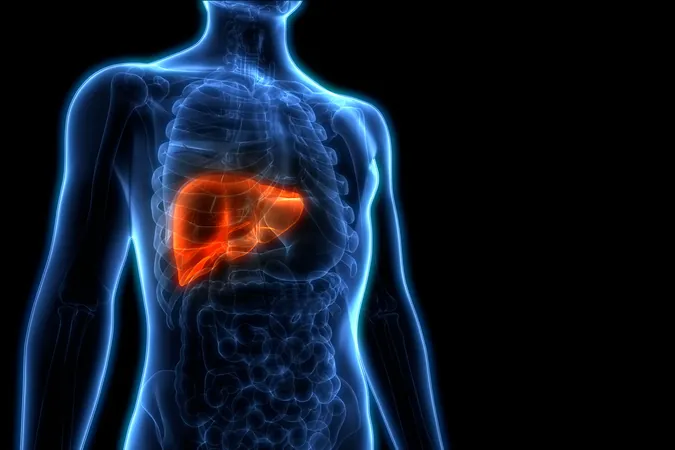
Breakthrough Discovery Links Bile Imbalance to Liver Cancer!
2025-04-25
Author: Wei
A Revolutionary Study Unveils Cancer Connection!
A groundbreaking study has uncovered a shocking link between bile acid imbalance and liver cancer, specifically hepatocellular carcinoma (HCC), the most prevalent form of this deadly disease. Researchers from Harvard have identified a key molecular switch that regulates bile, paving the way for innovative treatment options.
The Hidden Role of Bile Acids!
Bile, a substance produced by the liver, acts as a natural detergent, aiding in the digestion of fats. Yet, the role of bile acids extends far beyond simple digestion; they perform hormone-like functions that impact numerous metabolic processes. The research, led by Professor Yingzi Yang from the Harvard School of Dental Medicine, highlights how a delicate balance in bile acid production is crucial—disruptions can lead to severe liver injury, inflammation, and ultimately, liver cancer.
The Surprising Function of YAP!
Yang's team has been studying cell signaling pathways, particularly the Hippo/YAP pathway, known for its critical role in regulating cancer-related cell growth. Intriguingly, YAP, traditionally associated with promoting growth, actually acts as a repressor in this context, hindering the function of an essential bile acid sensor, FXR.
The Consequences of Imbalance!
When YAP is activated, it paralyzes FXR, leading to excessive bile acid production in the liver. This toxic buildup sets off a cascade of conditions, including fibrosis and inflammation, ultimately increasing the risk of liver cancer.
Hope on the Horizon: Potential Treatments!
The researchers believe that blocking YAP’s repressive action could halt this destructive cycle. Strategies such as enhancing FXR functionality or boosting bile acid excretion have shown promise in experimental models, potentially reducing liver damage and cancer progression.
A Bright Future for Cancer Treatment!
"This research could lead to new pharmacological solutions that excite us about stimulating FXR," Yang revealed, emphasizing the broader implications of how YAP influences metabolic control. This innovative work is supported by the National Institutes of Health and the National Cancer Institute, paving the way for future advances in liver cancer therapies.
In Summary!
This study marks a significant leap forward in understanding liver cancer's etiology, highlighting how critical bile acid regulation could be the key to unlocking new treatments. Stay tuned as this research evolves, offering hope to millions affected by liver diseases!
 Brasil (PT)
 Canada (EN)
 Chile (ES)
 Česko (CS)
 대한민국 (KO)
 España (ES)
 France (FR)
 Hong Kong (EN)
 Italia (IT)
 日本 (JA)
 Magyarország (HU)
 Norge (NO)
 Polska (PL)
 Schweiz (DE)
 Singapore (EN)
 Sverige (SV)
 Suomi (FI)
 Türkiye (TR)
 الإمارات العربية المتحدة (AR)