Breakthrough Drug Targets Atherosclerosis and Fatty Liver Disease in Monkeys!
2025-04-22
Author: Wei
Revolutionary Treatment on the Horizon
In an exciting breakthrough, researchers have developed a drug candidate that not only tackles severe fatty liver disease but also combats atherosclerosis, a leading cause of heart-related deaths around the globe. Known as DT-109, this innovative amino acid compound has shown promising results in large mammals, specifically nonhuman primates.
How Does It Work?
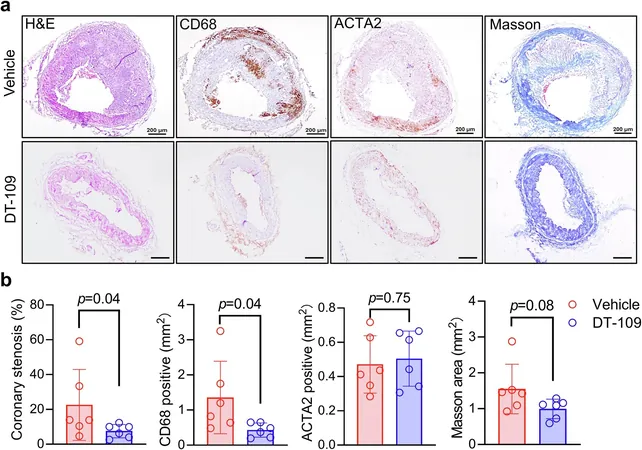
DT-109, discovered at the University of Michigan, has been successful in curbing the development of atherosclerotic plaques in both the aorta and coronary arteries of test subjects. The glycine-based tripeptide doesn't just halt plaque formation; it also interrupts vital processes leading to vascular calcification, a key factor in arterial stiffness and plaque instability.
A Game Changer in Cardiovascular Medicine
Co-senior author Dr. Eugene Chen, a renowned professor of cardiovascular medicine, notes that while traditional medications often fail to effectively address atherosclerosis and vascular calcification, DT-109 shows immense potential to transform therapeutic strategies. "This drug could revolutionize how we approach these critical health threats," he stated.
Dual Power: Tackling Two Major Diseases
Originally developed in 2019 to address impaired glycine metabolism in non-alcoholic fatty liver disease, DT-109 has recently proven effective in reversing severe liver conditions like nonalcoholic steatohepatitis (NASH), which impacts about 7% of the global population.
Innovative Research Fuels Hope
Research indicates that NASH significantly heightens the risk of atherosclerosis, increasing chances of life-threatening events such as heart attacks and strokes. Dr. Jifeng Zhang, co-author of the study, emphasized the urgent need for effective therapies that can simultaneously target liver dysfunction and its cardiovascular repercussions.
Cutting-Edge Methodology
In a recent study, researchers fed nonhuman primates a cholesterol-rich diet for 10 months before administering oral DT-109. The results were groundbreaking—DT-109 not only decreased plaque formation but also reduced chronic inflammation linked to arterial calcification, tackling both issues at their source.
A Future Filled with Promise
Current treatments for atherosclerosis mainly use lipid-lowering medications, which do not address vascular calcification and leave patients exposed to ongoing risks of cardiovascular events. With the nonhuman primate models offering a closer representation of human conditions than genetically modified mice, researchers believe DT-109 could quickly transition into clinical trials.
Hope for Millions
Dr. Chen projects that DT-109 could redefine the landscape of treatment, significantly improving outcomes for patients battling metabolic dysfunction and cardiovascular complications. With the potential to mitigate liver damage and inflammatory pathways, this groundbreaking drug could not only save lives but also revolutionize efforts against cardiovascular diseases.

 Brasil (PT)
 Canada (EN)
 Chile (ES)
 Česko (CS)
 대한민국 (KO)
 España (ES)
 France (FR)
 Hong Kong (EN)
 Italia (IT)
 日本 (JA)
 Magyarország (HU)
 Norge (NO)
 Polska (PL)
 Schweiz (DE)
 Singapore (EN)
 Sverige (SV)
 Suomi (FI)
 Türkiye (TR)
 الإمارات العربية المتحدة (AR)