Breakthrough in Language Recovery: Combining Brain Stimulation with Speech Therapy for Aphasia Patients
2025-04-21
Author: Nur
A Fresh Approach to Primary Progressive Aphasia
Primary progressive aphasia (PPA) is a devastating neurological disorder that leads to a gradual loss of language skills over time. Until now, there has been no cure or medication available to halt its progression, leaving traditional speech-language therapy as the primary mode of support for those affected. However, groundbreaking research from the University of Arizona aims to change the game.
Innovative Treatment Combines Therapy and Brain Stimulation
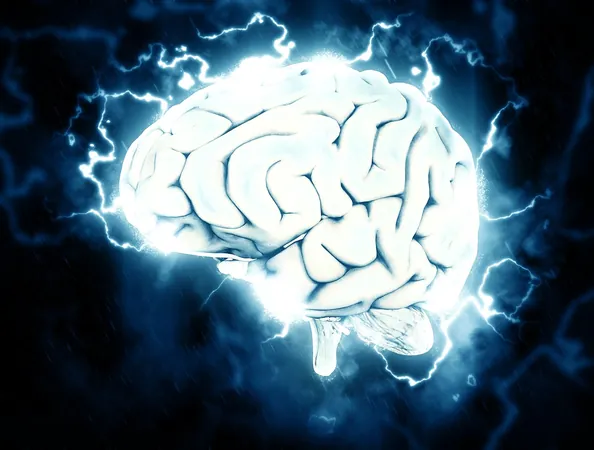
Neuroscientists at the University have developed an innovative approach by merging speech therapy with non-invasive brain stimulation, specifically transcranial direct current stimulation (tDCS). This technique involves applying a low electrical current through electrodes placed on the scalp, enhancing the brain’s ability to learn and adapt.
Promising Results from Recent Study
A study published in the Journal of Speech, Language, and Hearing Research reveals that this dual treatment is significantly more effective than speech therapy alone. "PPA is a relatively new diagnosis, recognized in the last few decades and still not fully understood," explained Katlyn Nickels, the study's lead researcher.
Understanding the Science Behind Communication Challenges
As explained by senior author Aneta Kielar, communication relies not just on understanding word meanings but also on the phonetics associated with them. Problems in linking sounds to words make it exceedingly difficult for those with PPA to express themselves clearly, which severely impacts their daily lives.
Targeted Brain Stimulation for Greater Impact
The researchers specifically focused on logopenic PPA, where individuals struggle to find the right words or repeat phrases. Using neuroimaging technology, they identified which areas of the brain were still responsive and targeted those areas with stimulation.
Key Findings from the Treatment Phases
During the study, twelve participants experiencing written language deficits underwent two treatment phases: one with active tDCS during speech therapy, and the other with a placebo stimulation. Randomized and separated by a two-month interval, results showed that patients demonstrated greater and more sustainable improvements in language skills when receiving the active stimulation.
Transformative Outcomes for Participants
After treatment, individuals who once struggled to form grammatically correct sentences and often made spelling errors were able to communicate much more effectively. "This indicates that the brain stimulation not only aids in neuroplasticity but significantly enhances the effects of speech therapy," Kielar noted.
Looking Ahead: Future Research and Implementation
The research team plans to explore genetic, cognitive, and neural factors that influence recovery from PPA, aiming to integrate these findings into clinical practice. With its cost-effective, safe, and easy application method, tDCS may soon remove significant barriers to effective treatment.
 Brasil (PT)
 Canada (EN)
 Chile (ES)
 Česko (CS)
 대한민국 (KO)
 España (ES)
 France (FR)
 Hong Kong (EN)
 Italia (IT)
 日本 (JA)
 Magyarország (HU)
 Norge (NO)
 Polska (PL)
 Schweiz (DE)
 Singapore (EN)
 Sverige (SV)
 Suomi (FI)
 Türkiye (TR)
 الإمارات العربية المتحدة (AR)