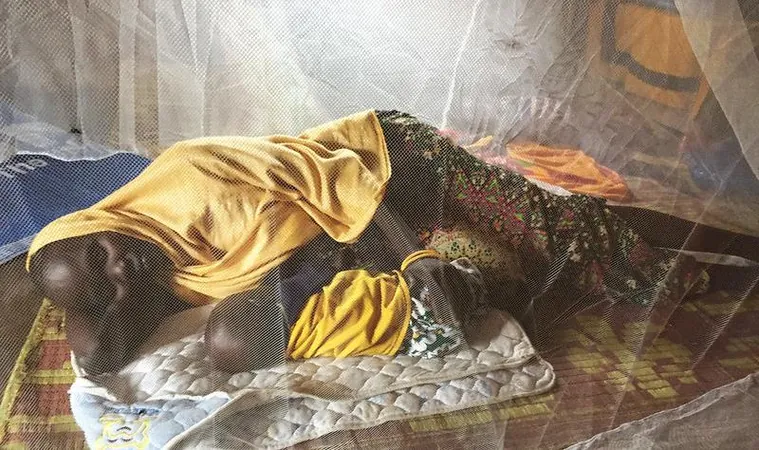
Breakthrough Study Reveals Game-Changing Malaria Treatment for Young Children
2025-04-24
Author: Wei
Revolutionary Findings on Malaria Treatment
A groundbreaking study has emerged, shedding light on the use of a low dose of primaquine to combat malaria transmission among young children. According to a comprehensive systematic review and meta-analysis published in The Lancet Infectious Diseases, this widely available antimalaria drug, when added to the standard artemisinin-based combination therapy (ACT), is safe and effective, mirroring results seen in older age groups.
A Vital Step in Malaria Elimination Efforts
The study, released just ahead of World Malaria Day, reveals that incorporating primaquine is crucial in preventing the transmission of Plasmodium falciparum malaria. This drug specifically targets the gametocytes, or mature malaria forms, thereby thwarting the cycle of transmission to mosquitoes. The World Health Organization (WHO) had recommended this addition back in 2012 to bolster malaria elimination initiatives and counteract the troubling rise of artemisinin-resistant malaria strains.
Addressing Concerns for the Most Vulnerable
While prior studies indicated the safety of primaquine across all age groups, questions lingered regarding its effects on children under five, who bear the highest burden of malaria. Concerns about potential side effects, such as hemolytic anemia from available adult formulations, made researchers cautious.
Robust Data Reinforce Efficacy of Primaquine
The analysis included data from 30 studies, encompassing 6,056 patients across 16 diverse countries. Alarmingly, a significant proportion—19.3%—were children under five. Results demonstrated that children receiving primaquine were less likely to have detectable gametocytes up to 14 days later, with no significant differences observed between younger children and their older counterparts.
Safety Underlined by Comprehensive Analysis
The safety assessment highlighted that a single dose of primaquine did not adversely affect hemoglobin levels in patients, regardless of age or glucose-6-phosphate dehydrogenase activity—an encouraging sign for its use in young children.
WHO Calls for Urgent Action Against Resurgence
As the study was unveiled the day before World Malaria Day, it serves as a clarion call for renewed commitment in the fight against malaria. Despite noteworthy advancements leading to the prevention of over 2 billion malaria cases since 2000, the disease continues to afflict approximately 263 million individuals annually, resulting in around 600,000 deaths, predominantly in Africa.
A Critical Moment for Global Health
WHO Director-General Tedros Adhanom Ghebreyesus emphasized that fragile health systems, climate change, and resistance to treatment threaten progress. Unfortunately, recent foreign aid freeze and cuts to healthcare agencies have further jeopardized malaria services across numerous endemic nations. He urged an increase in domestic healthcare funding and a replenishment of key global health funds to combat this pressing issue.
Hope Amid Challenges
The study's findings not only promise a powerful tool in reducing malaria transmission among children but also illustrate the potential of renewed commitment and collaboration in global health initiatives. Tedros concluded with a potent reminder: sustained investment and concerted action can turn the tide in the battle against malaria, safeguarding the future of the most vulnerable populations.
 Brasil (PT)
 Canada (EN)
 Chile (ES)
 Česko (CS)
 대한민국 (KO)
 España (ES)
 France (FR)
 Hong Kong (EN)
 Italia (IT)
 日本 (JA)
 Magyarország (HU)
 Norge (NO)
 Polska (PL)
 Schweiz (DE)
 Singapore (EN)
 Sverige (SV)
 Suomi (FI)
 Türkiye (TR)
 الإمارات العربية المتحدة (AR)