China to Strengthen Amid U.S. Tariff Policy, Expert Warns
2025-04-20
Author: Jia
In a bold prediction, Sompop Manarungsan, president of the Panyapiwat Institute of Management, warns that President Trump's tariff strategy may inadvertently empower China while reshaping global manufacturing dynamics.
Trump's policy aims to curb China's economic influence but also seeks to return manufacturing jobs back to American soil. However, Sompop suggests this could backfire, noting that China offers vast domestic market opportunities, overshadowing U.S. exports. With a staggering domestic retail market value of $6.9 trillion, China's reliance on U.S. exports—around $500 billion—represents a mere blip in its economic landscape.
"Even if exports to the U.S. halved, that $250 billion would still compare to just a fraction of China’s domestic consumption, making a fallback on domestic markets more viable," Sompop explained.
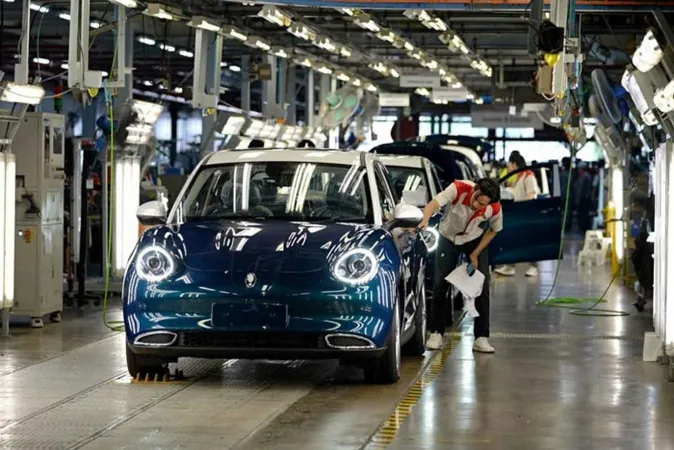
To counterbalance potential losses from U.S. tariffs, China is likely to shift manufacturing bases abroad, producing goods tailored to replace imports in various countries. This strategy, termed 'import substitution,' will allow China to sidestep import accusations while tapping into markets in the Global South and North.
Sompop argues that this transition will empower China economically, as its investments establish new production footprints around the world. Meanwhile, the U.S.—boasting a population of 340 million but higher production costs—faces a long-term competitive disadvantage.
He described Trump’s approach as attempting to swim against the current, asserting that the U.S. economy should pivot towards its strengths in service and finance, rather than resurrecting outdated manufacturing policies.
Sompop warns, "This policy reversal is fundamentally flawed," predicting it could further isolate the U.S. economically. He pointed out the inflated U.S. stock market, valued at two to three times the nation's GDP, and indicated that a decline would unfavorably impact consumer spending, which constitutes 70% of the U.S. economy.
As rising prices increase inflation, the Federal Reserve may find itself forced to raise interest rates, posing an immediate threat to the stock market and potentially inciting political unrest, as evidenced by recent protests.
Turning the lens to Thailand, Sompop revealed that a significant portion of the country's top exports—over 10 out of 15—are produced by foreign investors. With such a reliance on foreign production, hasty agreements favoring U.S. agricultural products could trigger backlash from local farmers, sparking fears of compromising Thailand's agricultural sector.
In a world where economic tides are turbulent, one thing is clear: the ramifications of U.S. tariff policies may far exceed their intended targets, leaving both allies and adversaries navigating a complex web of economic interdependence.

 Brasil (PT)
 Canada (EN)
 Chile (ES)
 Česko (CS)
 대한민국 (KO)
 España (ES)
 France (FR)
 Hong Kong (EN)
 Italia (IT)
 日本 (JA)
 Magyarország (HU)
 Norge (NO)
 Polska (PL)
 Schweiz (DE)
 Singapore (EN)
 Sverige (SV)
 Suomi (FI)
 Türkiye (TR)
 الإمارات العربية المتحدة (AR)