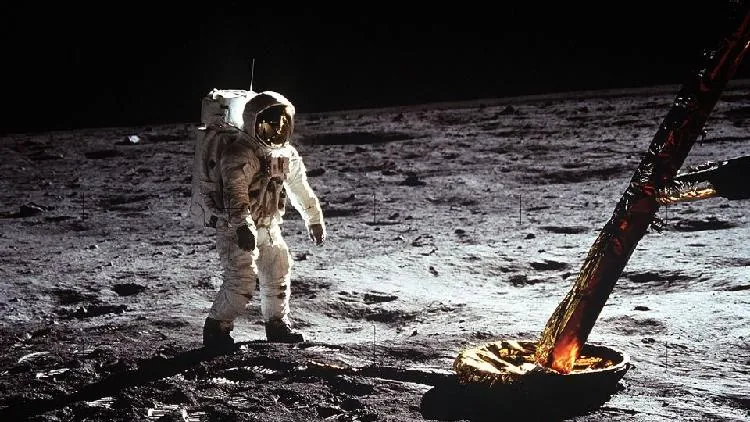
Could Astronauts Really Grow Their Own Food in Space? UK Researchers Say Yes!
2025-04-23
Author: Siti
Food on Mars: A Big Challenge for Space Travel
Dreaming of dining on Mars? Well, for now, it's just a dream! But as humanity gears up for deep space exploration, the real question is: how do we feed astronauts during lengthy missions to the Red Planet?
UK Scientists Have a Solution!
Here’s where UK researchers step in with a groundbreaking innovation! They’re working on a project to allow astronauts to cultivate their own meals in space using bioengineered cells and high-tech bioreactors.
Dr. Rodrigo Ledesma-Amaro, a leading expert at the Bezos Centre for Sustainable Protein and Microbial Food Hub at Imperial College London, envisions a future where astronauts can grow their own food, fuel, and even medicine while soaring through the cosmos!
A Costly Food Journey
Did you know each astronaut eats between half a kilogram to 1.5 kilograms of food daily? With transportation costs soaring up to $20,000 per kilogram, every meal could supposedly cost around $10,000! Imagine cutting those costs drastically by producing food on-site instead of shipping it from Earth!
Innovative Research Taking Flight
Thanks to financial backing from the Bezos Earth Fund, researchers at Imperial are delving into ways to create sustainable food using biofoundries—essentially turning cells into little factories that produce essential goods.
Their groundbreaking experiments recently took a giant leap when Europe’s Phoenix 1 spacecraft, equipped with a miniaturized lab called SpaceLab, was launched aboard a SpaceX Falcon 9 rocket on April 22. This marks a significant milestone in their research!
The Science Behind It: A Lab in a Box
This 'lab-in-a-box' technology allows for bio-experimentation in microgravity, free from the conventional hurdles faced in space-based research. According to Aqeel Shamsul, CEO of Frontier Space, the entire lab weighs under a kilogram and hosts several experiments that could revolutionize space agriculture.
The bioreactor is designed to grow yeast cells that are crucial for producing essential vitamins—a game-changer for astronaut nutrition.
Future Prospects: Manufacturing in Space
The data gathered from this mission will help refine an innovative inflatable atmospheric decelerator, which is set to serve as both a re-entry heat shield and a parachute allowing for safe landings.
ATMOS Space Cargo, the company behind Phoenix, believes that this technology will unlock new opportunities for in-space manufacturing across various industries!
Dreaming Big for Moon Colonization
Looking to the future, Shamsul emphasizes the need for such bioreactors to sustain a permanent lunar base, which could be pivotal in nurturing human civilization beyond Earth.
A Tasty Future in Space?
Dr. Ledesma-Amaro and his team are hopeful that a brief time in microgravity will confirm their cells' ability to produce a wide range of products—from bio-diesel to delicious dairy items and even sweet treats like vanilla ice cream!
Just a few years ago, NASA made headlines when astronauts successfully grew chili peppers aboard the International Space Station, setting records for the most astronauts fed by a single space-grown crop. The future of intergalactic dining looks bright!
 Brasil (PT)
 Canada (EN)
 Chile (ES)
 Česko (CS)
 대한민국 (KO)
 España (ES)
 France (FR)
 Hong Kong (EN)
 Italia (IT)
 日本 (JA)
 Magyarország (HU)
 Norge (NO)
 Polska (PL)
 Schweiz (DE)
 Singapore (EN)
 Sverige (SV)
 Suomi (FI)
 Türkiye (TR)
 الإمارات العربية المتحدة (AR)