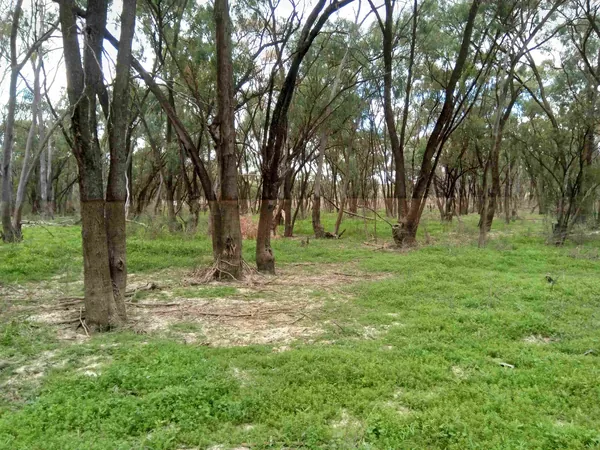
Crucial Insights on Woodland Vegetation Amidst Climate Challenges
2025-04-24
Author: Siti
Australian Woodlands Face Water Woes
As Australia grapples with extreme weather patterns, native woodlands are feeling the brunt of prolonged droughts and heavy flooding. This growing concern calls for sophisticated management strategies to effectively monitor and address the water needs of these vital ecosystems.
Innovative Study Unveils New Monitoring Techniques
In a groundbreaking study led by Flinders University, experts collaborated across Australia alongside researchers from China and the U.S. to unveil methods for accurately estimating the water usage of trees and the understory vegetation found beneath the forest canopy. Their findings, published in the esteemed Journal of Hydrology, promise to enhance the management of these crucial woodlands.
Understanding Evapo-Transpiration (ET) in Ecosystems
Evapo-transpiration (ET) plays a critical role in returning moisture from soil and plants into the atmosphere, forming a major part of terrestrial water balance. Professor Huade Guan from Flinders University emphasized the challenge of monitoring understory ET using traditional methods and introduced a revolutionary technique to measure it effectively in floodplains and catchment areas.
The Significance of Understory ET
Research indicates that understory ET contributes significantly to ecosystem water use—ranging from 10% in cooler months to as much as 50% during hot periods. By employing advanced airborne thermal imagery and sophisticated models, the team aimed to map understory ET effectively, paving the way for better ecological water management.
Diverse Settings, Diverse Findings
The researchers focused on two contrasting study sites: the River Red Gum woodland near Bookpurnong and a hilly woodland catchment near Mount Wilson. Each site exhibited unique climatic and topographical features, yet both underscored the critical role of understory ET in ecosystem water balance.
Flooding's Impact on ET Dynamics
One compelling finding revealed that flooding altered water availability and, consequently, the dynamics of understory ET. Notably, following significant floods in 2022-23, the proportion of understory ET compared to total ecosystem ET declined, a trend linked to increased overstory transpiration.
The Role of Slope Orientation
Interestingly, the study also highlighted how slope orientation affects ET rates. North-facing slopes, particularly in wet winters, exhibited a much higher understory ET, accounting for nearly half of the total surface ET. This increased evaporation could lead to a rapid depletion of soil moisture, posing challenges for vegetation during drier summer months.
The Need for Innovative Solutions
As climate change continues to dry out regions like South Australia—forecasted to see a 15% to 30% reduction in rainfall by 2050—proactive management of water resources becomes essential. The SA Government's Water for Good plan underscores the importance of understanding water capacity and ensuring sustainable practices to prevent resource over-exploitation.
A Call to Action
This study is a clarion call for integrating innovative methodologies in tackling environmental challenges. With climate change wreaking havoc, effective management of our natural resources is more crucial than ever—ensuring the health and viability of Australia's native woodlands for generations to come.

 Brasil (PT)
 Canada (EN)
 Chile (ES)
 Česko (CS)
 대한민국 (KO)
 España (ES)
 France (FR)
 Hong Kong (EN)
 Italia (IT)
 日本 (JA)
 Magyarország (HU)
 Norge (NO)
 Polska (PL)
 Schweiz (DE)
 Singapore (EN)
 Sverige (SV)
 Suomi (FI)
 Türkiye (TR)
 الإمارات العربية المتحدة (AR)