Facing Malaria: A Battle for Refugee Children in Kenya
2025-04-25
Author: Wei Ling
A Mother’s Fear in the Refugee Camp
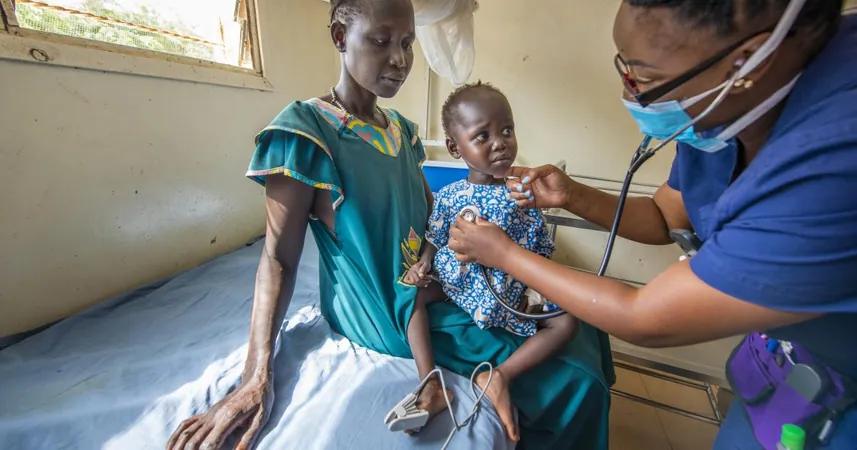
In the sweltering heat of a hospital ward, Madina Sabit desperately fans her ailing daughter, Tana, with a piece of cardboard. The two-year-old is slowly recovering from malaria, a disease that remains one of Africa's deadliest threats to children.
"I constantly fear for my children's lives due to this disease; it’s our greatest challenge here," Madina admits solemnly.
The Struggles of Refugee Life
Since fleeing the civil war in South Sudan in 2014, Madina has lived in the Kakuma refugee camp, home to around 300,000 people from several volatile East African nations. Like countless others, Madina’s family resides in a cramped shelter that offers minimal protection from the elements, particularly from the mosquitoes that spread malaria.
"We do our best to sleep under nets, but my children often play outside in the evenings which makes it impossible to prevent mosquito bites," she explains.
Rainy Seasons and Dangerous Conditions
The situation worsens dramatically during the rainy season when stagnant water creates a perfect environment for mosquitoes to breed. "This period also sees a rise in waterborne diseases and malnutrition, which makes everyone more vulnerable to malaria,” adds Frida Gakii, a nurse at the International Rescue Committee-run hospital.
"Malaria can also exacerbate malnutrition because it diminishes children's appetites," she warns.
A Grim Global Outlook
Each year, around 250 million people contract malaria, resulting in over 600,000 deaths, predominantly among children. Africa bears a staggering 95% of these fatalities, making malaria the leading cause of death on the continent.
Compounding the crisis, scientists have revealed new resistance to artemisinin, a critical malaria treatment, among children in Africa.
The Urgency of Action
Climate change further fuels the transmission of malaria, as rising temperatures create ideal conditions for mosquitoes. Clément Cazaubon, overseeing EU humanitarian programs in Kenya, states, "Despite the challenges, malaria is preventable and curable; investing in protective measures can significantly save lives."
The EU, alongside humanitarian partners, is proactive in training local health workers to identify and treat malaria cases and educate communities on protective strategies. They also implement mosquito control measures, including sprays to curb breeding.
Hope Amid Adversity
Nevertheless, overcrowded conditions and substandard sanitation lead to a staggering number of new malaria infections each month in Kakuma. For little Tana, this is her third bout with the disease.
"And she will be fine this time too," Gakii assures, though the fight against malaria continues relentlessly.
 Brasil (PT)
 Canada (EN)
 Chile (ES)
 Česko (CS)
 대한민국 (KO)
 España (ES)
 France (FR)
 Hong Kong (EN)
 Italia (IT)
 日本 (JA)
 Magyarország (HU)
 Norge (NO)
 Polska (PL)
 Schweiz (DE)
 Singapore (EN)
 Sverige (SV)
 Suomi (FI)
 Türkiye (TR)
 الإمارات العربية المتحدة (AR)