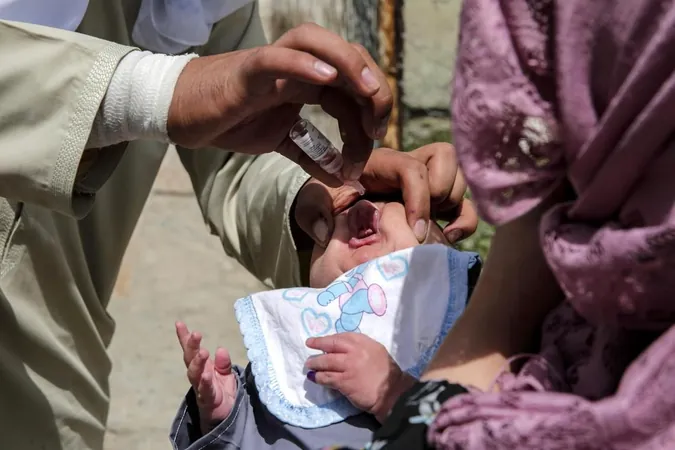
Funding Cuts Threaten Child Vaccinations, Warns UN
2025-04-24
Author: Nur
A Crisis for Childhood Vaccination
The United Nations has sounded the alarm: global aid funding cuts, particularly from the United States, are jeopardizing vital childhood vaccinations against deadly diseases, mirroring the disruptions caused by the Covid-19 pandemic. This stark warning was issued on April 24.
Rising Disease Threats
Across the globe, outbreaks of infectious diseases such as measles, meningitis, and yellow fever are on the rise. Alarmingly, emergency and routine vaccination efforts have faced significant setbacks in nearly half of the countries surveyed at the beginning of April, according to reports from the World Health Organization (WHO) in 108 low and lower-middle-income countries.
Impact of Funding Shortfalls
The reductions in financial support are not just limiting vaccine availability; they also hinder disease surveillance efforts. As the WHO and UNICEF pointed out in a joint statement with Gavi, the Vaccine Alliance, these challenges resemble those experienced during the peak of the Covid-19 crisis. UNICEF's Executive Director, Catherine Russell, stressed, “We cannot afford to lose ground in the fight against preventable diseases.”
A Call to Action for Funding
The crisis comes on the heels of the largest setback in childhood immunization in a generation, primarily due to the pandemic. With the US—once the top donor—scaling back its contributions, there are grave concerns that the results could be disastrous. The organizations have appealed for sustained funding for childhood immunization, especially as Gavi prepares for its funding round in June, aiming to raise $9 billion for initiatives stretching from 2026 to 2030.
The Current Landscape of Infectious Diseases
Since 2021, measles cases have consistently risen, with an alarming surge in meningitis observed in Africa this year. Additionally, yellow fever outbreaks are re-emerging after a decade of decline. Dr. Sania Nishtar, CEO of Gavi, emphasized that while combating the growing tide of infectious diseases is achievable, it hinges on adequate funding.
US Funding Decisions Hang in the Balance
In March, a US government document revealed plans to continue cuts to UNICEF and WHO, canceling a substantial annual contribution of around $300 million to Gavi as part of its 'America First' policy. Recently, the US State Department nominated Mark Lloyd as the new assistant administrator for global health to Gavi’s board, a position that had been vacant for some time, yet questions remain about what this means for future US funding.

 Brasil (PT)
 Canada (EN)
 Chile (ES)
 Česko (CS)
 대한민국 (KO)
 España (ES)
 France (FR)
 Hong Kong (EN)
 Italia (IT)
 日本 (JA)
 Magyarország (HU)
 Norge (NO)
 Polska (PL)
 Schweiz (DE)
 Singapore (EN)
 Sverige (SV)
 Suomi (FI)
 Türkiye (TR)
 الإمارات العربية المتحدة (AR)