Groundbreaking Miniature Livers: A Game-Changer for Medicine!
2025-04-16
Author: Wei
The Liver: A Vital Organ Under Threat
The liver is crucial for our metabolism, managing essential functions such as converting nutrients into glucose, storing fats, and detoxifying harmful substances. Shockingly, over a third of the global population suffers from liver-related diseases, including the increasingly prevalent metabolic dysfunction-associated steatotic liver disease (MASLD), threatening the organ's critical roles.
Revolution in Organ Models
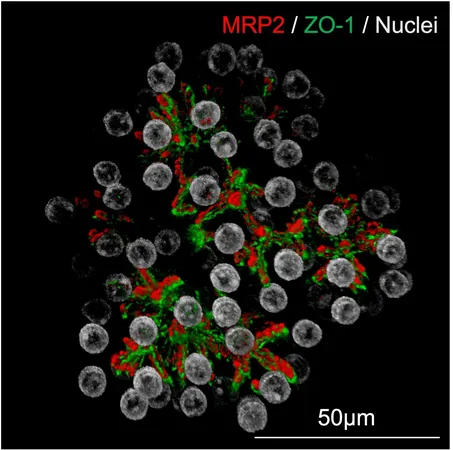
Enter hepatocyte organoids—miniature 3D liver models that hold the potential to revolutionize drug development and regenerative medicine. Researchers from Keio University have recently made headlines with a method that allows these complex organoids to multiply an astonishing million-fold in just 3 to 4 weeks without losing essential liver functions.
Professor Toshiro Sato, the senior author of the study featured in *Nature*, states that these organoids could represent the most accurate lab-based mimic of liver functionality. However, creating fully functional models has challenged researchers for years due to the liver's intricate requirements.
A Breakthrough in Growth and Functionality
The revolutionary study led by Ryo Igarashi and Mayumi Oda unveiled a groundbreaking technique involving cryopreserved human adult hepatocytes harvested from patients. Utilizing oncostatin M, a protein significant in inflammation, they achieved unprecedented growth levels, allowing the organoids to thrive for three months and survive up to half a year, all while retaining their ability to differentiate.
The new hormones introduced by the researchers further enhanced the organoids' ability to perform key liver functions, producing vital compounds such as glucose and urea, with albumin levels reaching those found in healthy human livers.
Animal Testing: A Promising Path Forward
The implications of this research are vast. In experiments, injecting these human hepatocyte organoids into immunocompromised mice led to the replacement of the mice's damaged liver cells, restoring their liver functions—a promising step towards future liver regeneration therapies.
Considering the scarcity of donor livers for transplantation, the team's pioneering approach could be key. By potentially reviving the proliferation capability of frozen cells to create organoids, this method could provide a new regenerative resource.
Streamlining Drug Development and Disease Research
Moreover, the implications stretch into drug development, particularly for liver diseases like MASLD. By offering a reliable and consistent alternative to traditional human hepatocyte batches—which can be costly and unreliable—these organoids facilitate more effective drug toxicity testing.
The research team also advanced gene editing techniques to replicate genetic liver diseases, marking significant progress in the modeling of conditions like ornithine transcarbamylase deficiency.
What's Next? A Bright Future for Liver Research
Looking ahead, Professor Sato emphasizes the need for further advancements in scaling up organoid production and incorporating diverse liver cell types to enhance their utility in medical research. With potentially life-saving applications on the horizon, this groundbreaking study opens new doors for treating liver diseases and could change the landscape of organ transplantation forever!


 Brasil (PT)
 Canada (EN)
 Chile (ES)
 Česko (CS)
 대한민국 (KO)
 España (ES)
 France (FR)
 Hong Kong (EN)
 Italia (IT)
 日本 (JA)
 Magyarország (HU)
 Norge (NO)
 Polska (PL)
 Schweiz (DE)
 Singapore (EN)
 Sverige (SV)
 Suomi (FI)
 Türkiye (TR)
 الإمارات العربية المتحدة (AR)