Groundbreaking Virtual Reality Technique Rescues Woman from Rare Heart Defect
2025-04-22
Author: Li
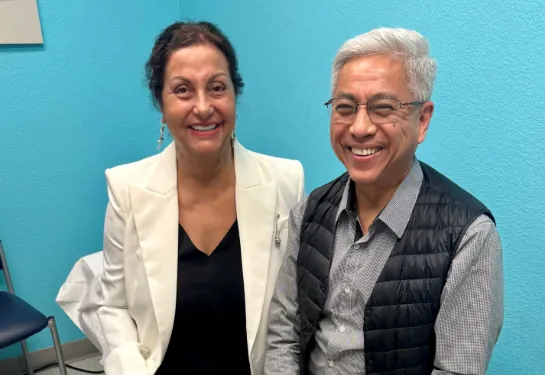
A Wake-Up Call for Gita Fulwiler
Meet Gita Fulwiler, a vivacious early riser known for her active lifestyle. However, a shocking turn of events in June 2023 saw her struggling to get out of bed and gasping for breath after merely walking a few steps. Simple tasks felt overwhelmingly exhausting, prompting a visit to her cardiologist.
The Unexpected Diagnosis
Concerned about possible coronary artery disease (CAD), doctors ordered a CT coronary angiogram. What they found was astonishing: a rare congenital heart defect, despite Fulwiler being in her early 60s. Congenital heart defects typically surface at birth or shortly after, marked by symptoms like fatigue, a heart murmur, or bluish skin.
"I’ve always been full of energy, so discovering this health issue was quite a shock," shared Fulwiler.
Understanding the Congenital Heart Defect
A referral to UC Davis Health led Fulwiler to undergo a transthoracic echocardiogram (TTE), revealing a complex congenital heart defect: a sinus venosus atrial septal defect (ASD) paired with partial anomalous pulmonary venous return (PAPVR). This combination meant oxygen-rich blood was malfunctioning, flowing back to the lungs instead of nourishing the body, resulting in her frightening symptoms.
Surgery: A Risky Solution
While typical treatment involves high-risk open-heart surgery to repair such defects, doctors hesitated due to Fulwiler’s pre-existing conditions, including diabetes and rheumatoid arthritis.
A Revolutionary Alternative with VR Technology
Instead of surgery, Fulwiler consulted with interventional cardiologist Frank Ing, chief of pediatric cardiology at UC Davis Health. Though an adult, she sought Ing's expertise because he specializes in congenital heart defects. Ing outlined a pioneering approach using advanced virtual reality technology.
Using augmented reality goggles, Ing projected a 3D visualization of Fulwiler's heart anatomy, enabling him to simulate the placement of a stent and assess potential obstructions in real-time.
Precision Through Innovation
The procedure involved strategically implanting a covered stent while navigating unusual vascular challenges. By inflating two high-pressure balloons in her pulmonary veins, Ing could mold the stent properly, securing the flow to the left atrium without obstruction.
Restoration and Recovery
Following the procedure, Fulwiler experienced remarkable improvement. Just weeks later, she was back to her routine, walking 30 minutes daily and lifting weights. "I feel like myself again," she exclaimed, grateful for Dr. Ing's innovative approach and dedicated care team.
A Life Changed Forever
Thanks to groundbreaking virtual reality techniques and expert medical intervention, Gita Fulwiler is not only surviving but thriving. This case highlights the incredible advancements in treating congenital heart defects and gives hope to those grappling with similar health challenges.



 Brasil (PT)
 Canada (EN)
 Chile (ES)
 Česko (CS)
 대한민국 (KO)
 España (ES)
 France (FR)
 Hong Kong (EN)
 Italia (IT)
 日本 (JA)
 Magyarország (HU)
 Norge (NO)
 Polska (PL)
 Schweiz (DE)
 Singapore (EN)
 Sverige (SV)
 Suomi (FI)
 Türkiye (TR)
 الإمارات العربية المتحدة (AR)