Hidden Dangers: How Your Medications Could Be Harming Brain Development
2025-04-22
Author: Yu
A Troubling Discovery in Medication Safety
A recent editorial in *Brain Medicine* has unveiled a shocking concern regarding commonly prescribed medications and their impact on brain development—a threat that has largely flown under the radar.
Sterol Disruption: The Mechanism of Concern
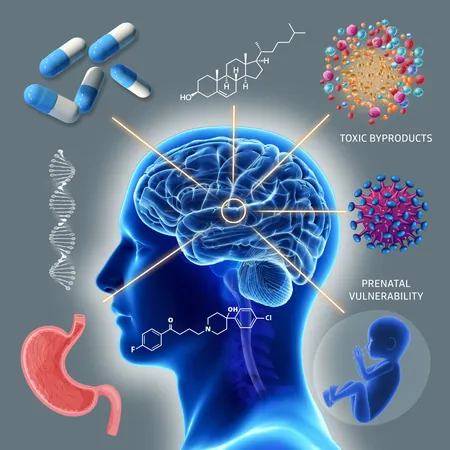
Authored by Julio Licinio, the publication highlights how more than 30 FDA-approved drugs, including popular psychiatric medications like aripiprazole and trazodone, disrupt sterol biosynthesis by inhibiting a crucial enzyme known as DHCR7. This interference dramatically increases levels of 7-dehydrocholesterol (7-DHC) in the body, resulting in a sterol profile similar to those observed in congenital metabolic disorders.
The Timing Is Critical: Vulnerable Populations
Dr. Licinio warns that these disruptions are particularly perilous during pregnancy and in developing children, yet such risks may have been largely ignored in drug safety assessments. He underscores that when combinations of these medications are prescribed—a common clinical practice—the consequences can be exponentially more dangerous, with toxic metabolite levels surging up to 15 times normal.
The Unseen Risk of Polypharmacy
The unsettling findings of Korade and Mirnics cast a shadow on the traditional prescribing practices. Dr. Licinio emphasizes, "If individual drugs can mimic a metabolic disorder, we must seriously question the safety of their interactions. We are effectively administering molecular cocktails with no scientific understanding of their impact on developmental neurochemistry."
Genetic Vulnerabilities: A Population at Risk
It’s reported that about 1-3% of the general population may carry single-allele DHCR7 mutations, increasing their risk of adverse effects from these medications. A single prescription could upset their biochemical equilibrium, while taking multiple medications could push them into a condition resembling Smith-Lemli-Opitz Syndrome, a severe developmental disorder.
The Urgent Need for Change
The editorial identifies several critical implications:
- Common psychiatric drugs could disrupt crucial biosynthesis pathways, potentially harming development across various life stages.
- Current drug approval methods overlook the combined effects of multiple medications, despite the widespread use of polypharmacy.
- Many individuals may be genetically predisposed to adverse reactions, raising the stakes even higher.
- Developmental risks extend beyond pregnancy, affecting infancy, childhood, and adolescence.
Recommendations for Immediate Action
To mitigate these risks, Dr. Licinio offers concrete recommendations:
- Pregnant women with the DHCR7± genotype should refrain from using medications that elevate 7-DHC levels.
- Genetic testing should be prioritized for women of reproductive age who may require these drugs.
- Avoid polypharmacy with medications that disrupt sterol synthesis during pregnancy.
- Individuals diagnosed with Smith-Lemli-Opitz Syndrome should not receive drugs known to elevate 7-DHC.
A Call to Action for Regulators and Pharma
Dr. Licinio calls for a complete overhaul in regulatory and pharmaceutical practices, advocating for mandatory sterol biosynthesis screenings during developmental safety assessments and a move away from outdated monotherapy testing.
"This is a call to action. Not someday. Now," he concludes, urging immediate attention to these alarming findings.
 Brasil (PT)
 Canada (EN)
 Chile (ES)
 Česko (CS)
 대한민국 (KO)
 España (ES)
 France (FR)
 Hong Kong (EN)
 Italia (IT)
 日本 (JA)
 Magyarország (HU)
 Norge (NO)
 Polska (PL)
 Schweiz (DE)
 Singapore (EN)
 Sverige (SV)
 Suomi (FI)
 Türkiye (TR)
 الإمارات العربية المتحدة (AR)