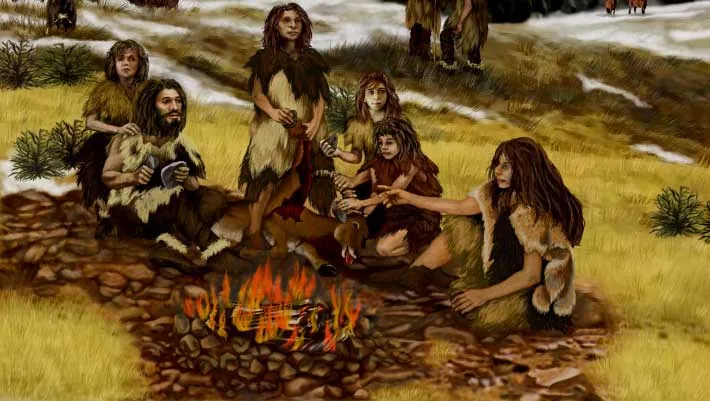
Ice Age Innovators: Discoveries Reveal Advanced Fire-Making Skills in Ukraine's Prehistoric Hearths
2025-04-22
Author: John Tan
Unveiling Ice Age Fire Masters
Archaeologists have made a groundbreaking discovery at the Korman’ 9 site along the Dniester River in Ukraine, dating back 45,000 to 10,000 years. Their research reveals that Ice Age humans not only managed to create various types of hearths but predominantly used wood, alongside bones and fat, to fuel their fires.
Fire: The Essential Survival Tool
The ability to create and maintain fire has long been recognized as a critical survival skill, especially during frigid periods. Fire revolutionized life, playing a crucial role in human evolution and everyday activities.
The Intricacies of Pyrotechnology
Recent studies illuminate the labor-intensive nature of fire usage. Far beyond mere warmth, fire was essential for cooking, tool-making, and social gatherings, reshaping how hunter-gatherer societies functioned. Dr. Philip R. Nigst from the University of Vienna emphasizes that fire management was integral to resource acquisition, impacting how these groups stored fuel and structured their living spaces.
Korman’ 9: A Window into the Past
Discovered during a survey in 2012, Korman’ 9 is situated on a northern terrace of the Dniester River. The latest research involved advanced tools like microstratigraphic and colorimetric analyses, leading to the identification of three flat, wood-fired hearths.
Temperatures that Shocked Researchers
One standout finding indicates that these prehistoric fires reached scorching temperatures exceeding 600 degrees Celsius, demonstrating a high level of pyrotechnic skill even under harsh conditions.
Fueling the Fire: What Did They Burn?
Although wood was the primary fuel, the researchers noted that other materials like bones could have been incinerated as well. Some burned animal bones recorded temperatures of over 650 degrees Celsius, prompting Dr. Marjolein D. Bosch, a zooarchaeologist, to explore their purpose—whether as fuel or mere accident.
Seasonal Adaptations and Control of Fire
The architectural designs of the hearths suggest a sophisticated understanding of fire management, with variations likely employed based on seasonal needs. One of the hearths was larger and more substantial, indicating potential for higher heat outputs.
Dr. Nigst concluded, "People had mastered fire control and used it differently depending on its purpose," highlighting that these hunter-gatherers revisited the same sites throughout the year during migratory travels.
Revolutionizing Our Understanding of Prehistoric Life
The study's findings, published in Geoarchaeology, not only shed light on the advanced fire-making techniques of our ancestors but also depict a complex, organized societal structure pivotal for survival during the Ice Age.
 Brasil (PT)
 Canada (EN)
 Chile (ES)
 Česko (CS)
 대한민국 (KO)
 España (ES)
 France (FR)
 Hong Kong (EN)
 Italia (IT)
 日本 (JA)
 Magyarország (HU)
 Norge (NO)
 Polska (PL)
 Schweiz (DE)
 Singapore (EN)
 Sverige (SV)
 Suomi (FI)
 Türkiye (TR)
 الإمارات العربية المتحدة (AR)